
.png)


.jpg)
.jpg)
.jpg)


July 03, 2026
By Craig Boddington
Originally Published on petersenshunting.com
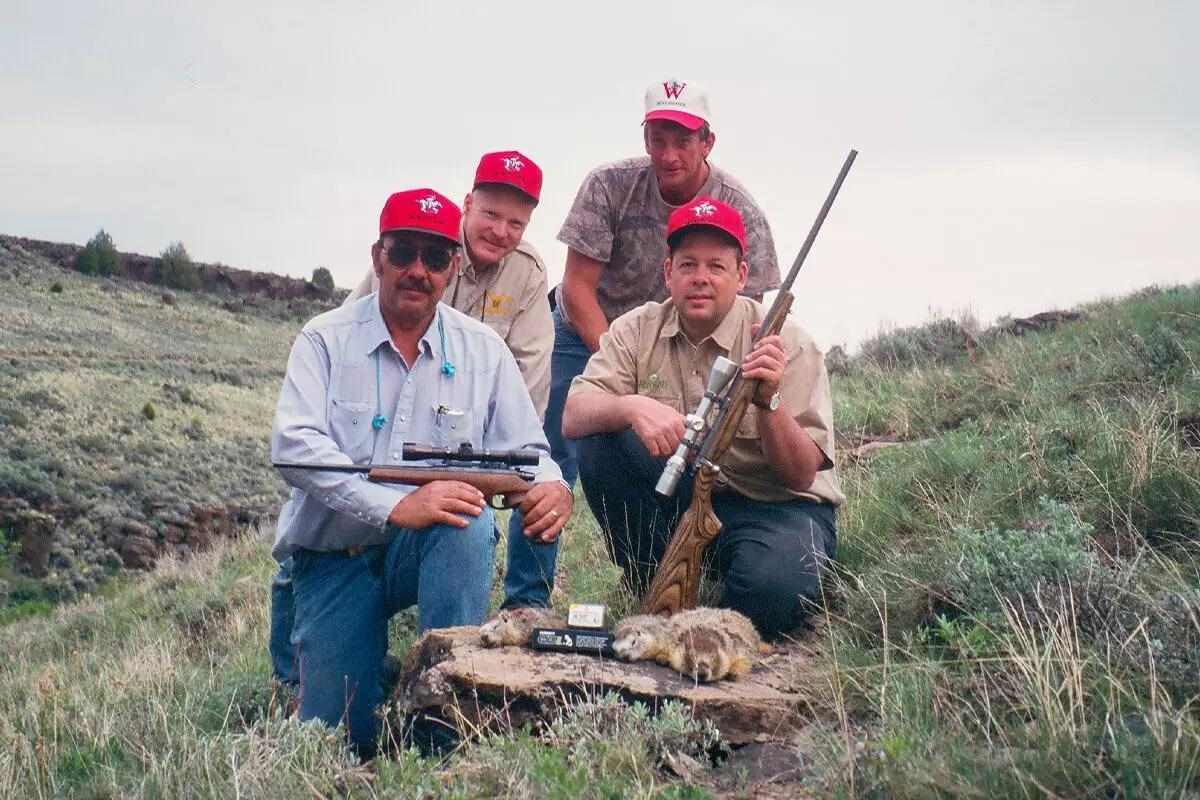
Image Above: Tough Crew. Rod Herrett, the author, Bill Bynum, and Kevin Howard on a rockchuck shoot in Idaho. On this hunt, everything from.22 WMR to .220 Swift was used, In varminting, must choose cartridges based on expected ranges.
On the one hand, American varmint hunting developed thanks to our Second Amendment. American hunters have the luxury of owning specialized firearms. And can cut ammo cost by handloading, which is illegal in many countries. On the other hand, varminting developed in a time when American big game was nearly gone and the average Joe needed access to cartridges that fill another role.
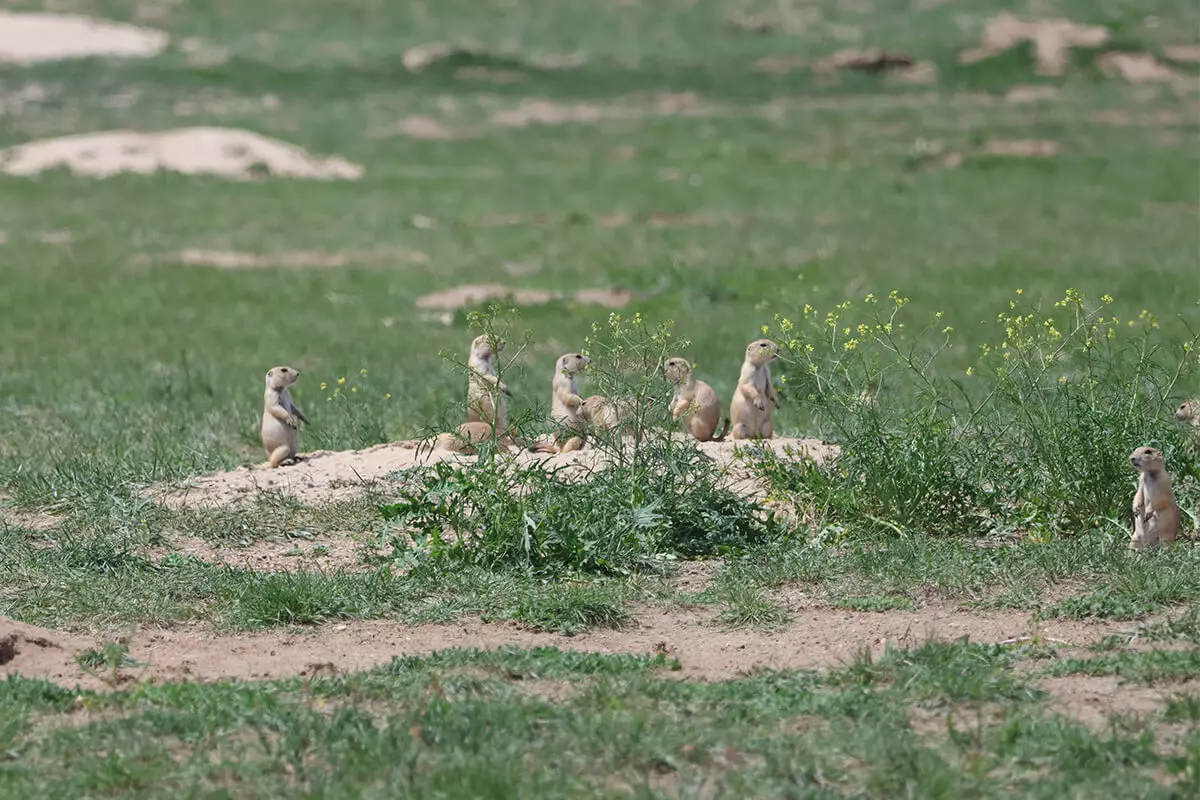
Varminting was enabled by new smokeless powder cartridges, delivering accuracy and range. Primary culprits vary regionally. In the East, woodchucks. In the West, rockchucks, prairie dogs, ground squirrels, jackrabbits, and gophers. Almost everywhere, coyotes are taken when encountered to reduce predation. (Impact: "Coyote Hunting to Help the Deer Herds Thrive.")
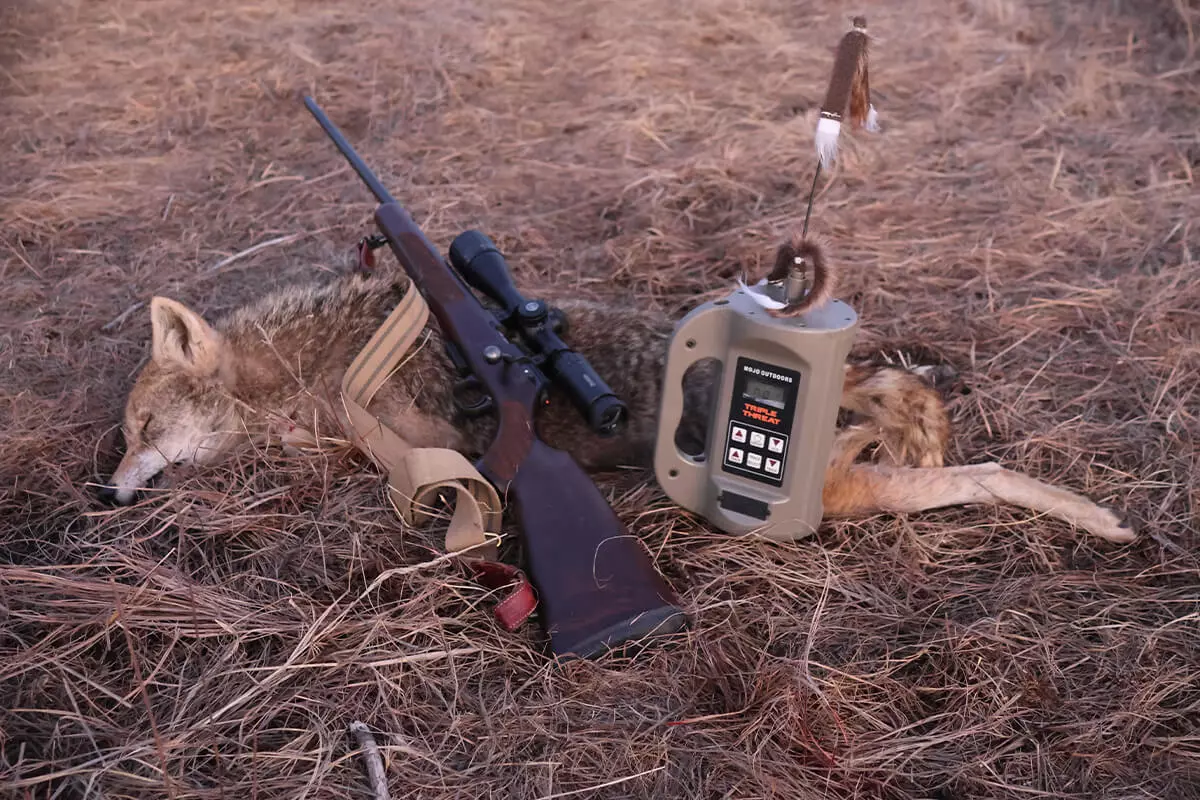
An interesting thing about varmint hunting: Few rules: long seasons, unlimited bag limits, and no caliber minimums or maximums. When I was young, I had a ball shooting prairie dogs and ground squirrels with a .375 H&H, using light 235-grain Speer bullets at screaming velocity. When I hit, the result was spectacular.
Obviously, no .375 is a “varmint cartridge,” but you can shoot varmints with anything you wish. You can have good fun with an accurate .22, and you can gain invaluable training with your favorite deer rifle. Ideal varmint cartridges are fast, flat-shooting, and accurate, with minimal recoil. The latter is important, especially in the West, where rodents establish colonies that can destroy productive pastures and where lots of shots are fired. The less recoil the better, so you can see the strike through the scope, correct your wind or range error, and try again.
Varmint bullets were also developed for accuracy, also thin-jacketed, and highly frangible. Not to inflict maximum damage to non-edible pests, but to cause the bullet to come apart upon encountering resistance and reduce the chances of ricochet.
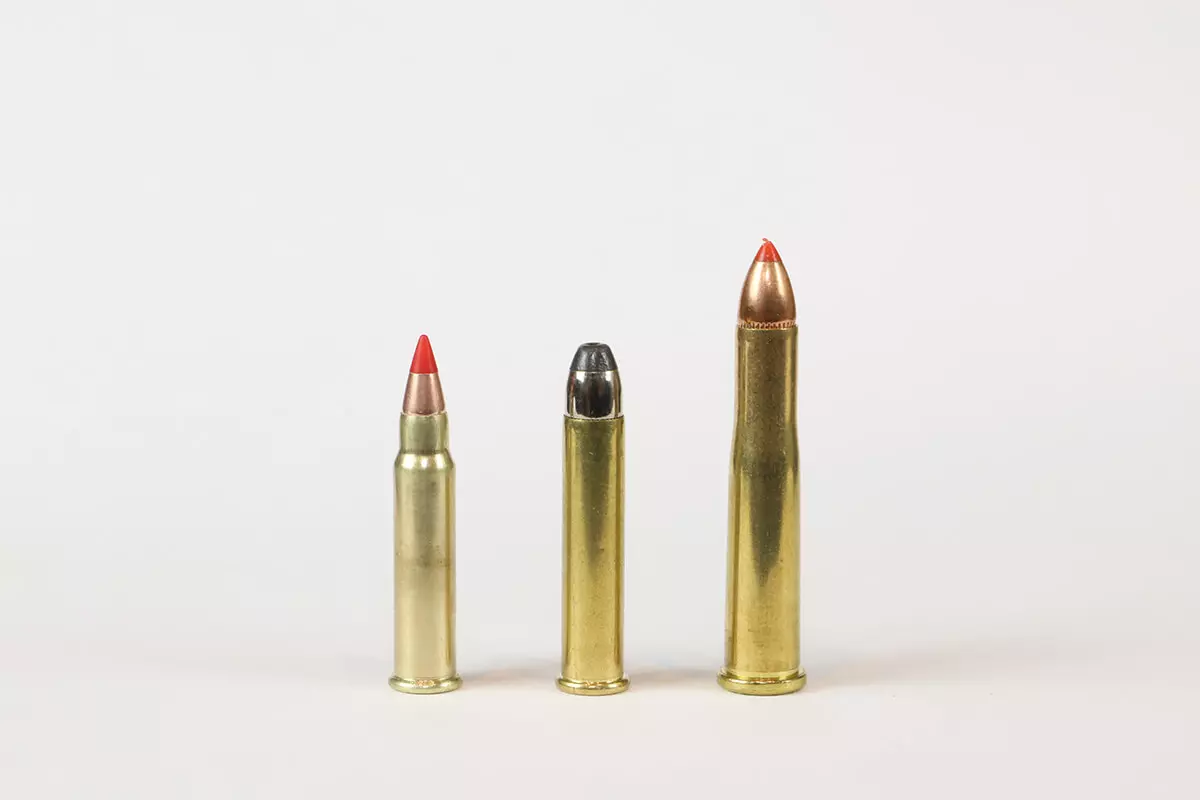
Already a popular wildcat, Winchester introduced the .22 Hornet in 1930, the first varmint cartridge. With a 45-grain bullet at 2690 fps, it wasn’t especially fast, but it was accurate and efficient, burning little powder and offering long barrel life. Today, rimfire .17 HMR and .22 WMR occupy the same role. I prefer the old Hornet. More range and power. Over time, faster centerfires came to dominate varmint hunting.
Winchester followed with the .220 Swift in 1935, the first and still among few cartridges that break 4000 fps. Despite impressive speed, the Swift got a reputation for short barrel life. Trust me, any time you approach 4000 fps, barrel wear is certain. At the same time, handloaders started experimenting with necking the .250 Savage case down to .22. The .22-250 remained a well-known wildcat until Remington legitimized it in 1965.
Some hunters go heavier. With light bullets, the .250 Savage (1915) and .257 Roberts (1934) were popular with varminters, and from the late teens, the .25-06 was a popular wildcat. Legitimized by Remington in 1969, it’s the most popular .25-caliber cartridge. To my thinking, .257 is the largest diameter that makes sense as a pure varmint rifle. Through the 1950s, the quarter-bores were the original crossover varmint/big game cartridges. Starting in 1955 with the simultaneous introduction of the .243 Winchester and .244 Remington, the 6mms assumed the crossover role. New 6mms (6mm ARC and Creedmoor) are excellent, except they kick too much to call shots through the scope.
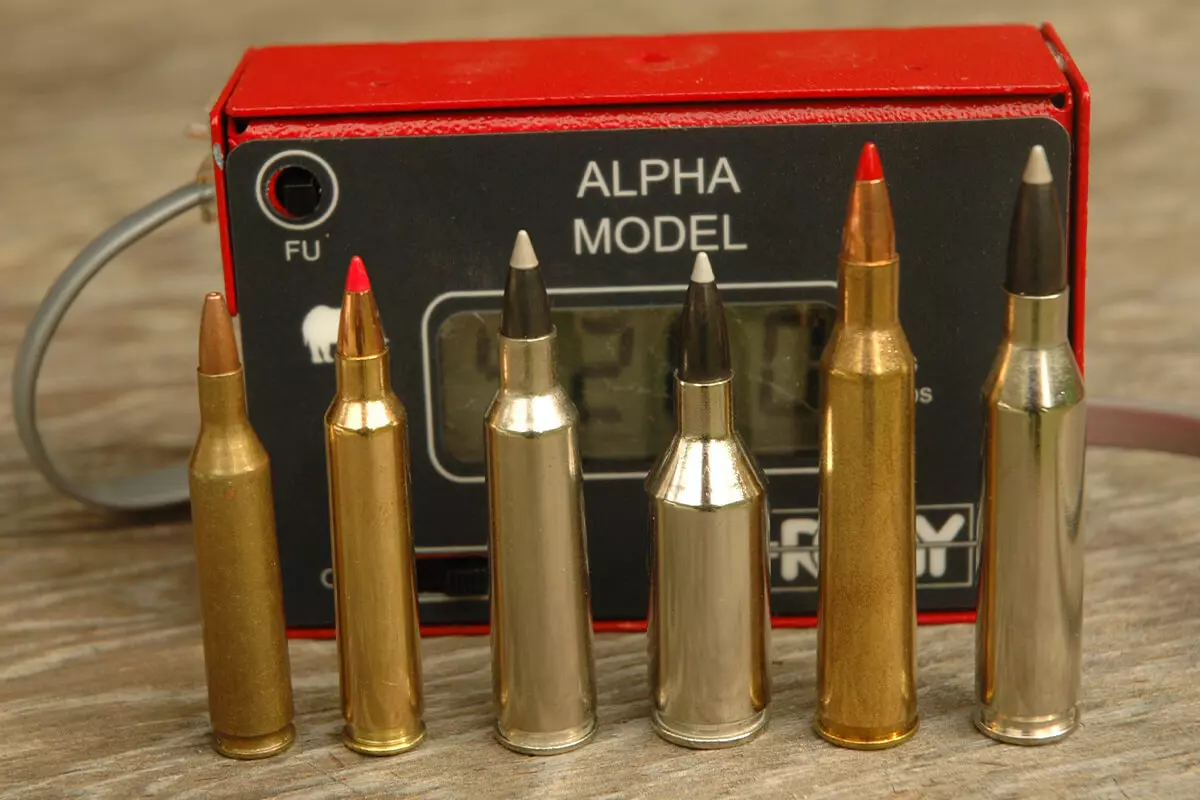
Some go smaller in caliber. .17-calibers (0.172-inch bullet diameter) were wildcatted from the 1920s and still are. In 1971, the .17 Remington was the first. Over 4000 fps and accurate, it has a reputation for rapid copper fouling. Slower .17s (.17 Hornet, .17 Remington Fireball) seem to alleviate this problem. With their light bullets, all .17s drift in wind. None of the centerfire .17s have been wildly popular. The runaway winner .17 is the .17 HMR (Hornady Magnum Rimfire).
Shockingly accurate and fun, .17 HMR is fantastic. It makes any list of great varmint cartridges, but range is limited, and it’s marginal for coyotes. Better be close.
Wildcat experiments with the .20-caliber (bullet diameter .204) also go back a long way. The .20-caliber solved most of the .17s problems. With bullets to 45 grains, coyote-capable. There were at least 20 wildcat .20-caliber cartridges. Todd Kindler’s 1998 .20 Tactical was getting popular. Then, in 2004, Hornady and Ruger collaborated on the .204 Ruger.
Since 1930 there have been various varmint cartridges, with overlap and redundance. My short list is arbitrary; you aren’t obligated to agree. I boil down the all-around best varmint cartridges to just three: .204 Ruger, .223 Remington, .22-250 Remington. I’ll start with the most popular, the .223.
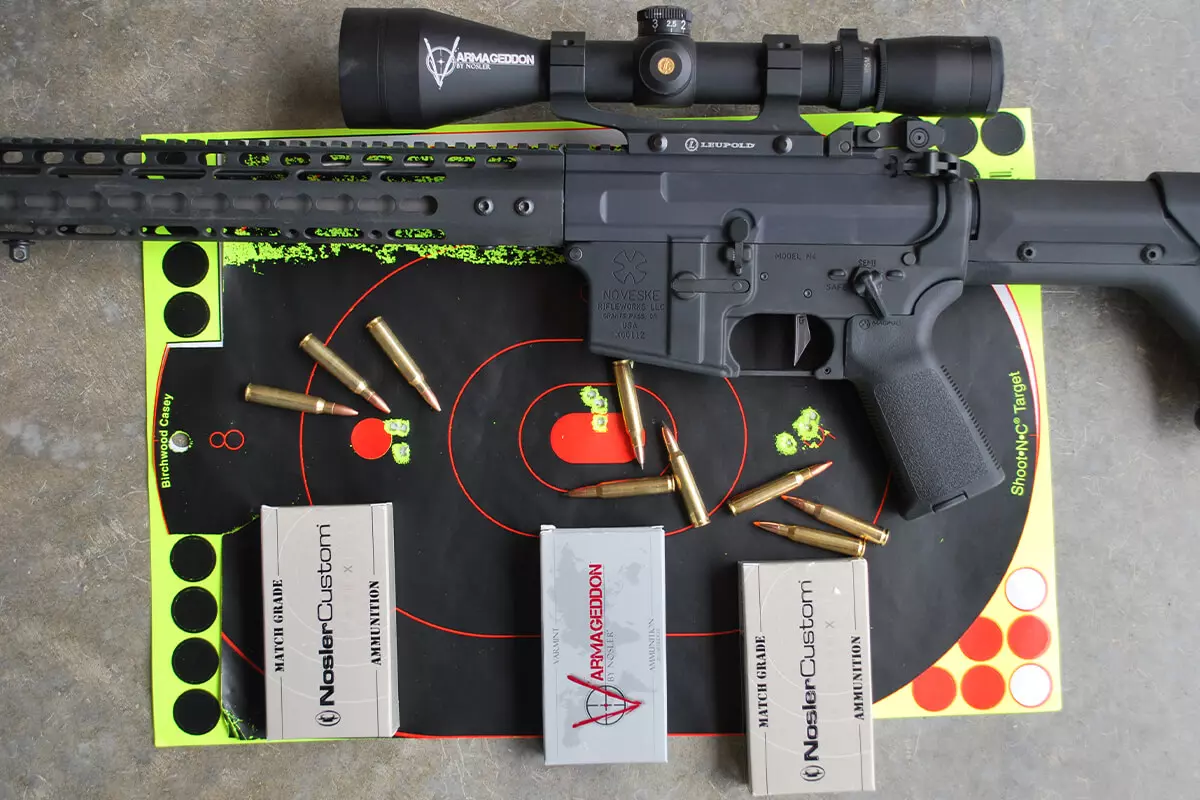
The .223 gets an unassailable boost as our standard military rifle cartridge for 60 years. Introduced in 1962, it is the most common chambering in the wildly popular AR15 action. Whether you love it or hate it, the .223 is our most popular centerfire cartridge.
In 1950, benchrest competitor and Remington engineer Mike Walker developed his concept of the ideal benchrest cartridge, introduced as .222 Remington, the “Triple Deuce.” With a 50-grain bullet at 3140 fps, it is a great varmint cartridge. Slower than the .220 Swift, it offered a better barrel life and was mild enough to call shots through the scope. It became the dominant varmint cartridge and might have remained so had the US military not confused things.
Seeking a smallbore military cartridge, testing started with the .222. It wasn’t quite fast enough to pass the 500-yard helmet penetration test. The military being as it is, to their credit, they didn’t reinvent the wheel. Instead, they stretched the .222 case. One version was introduced in 1958 as the .222 Remington Magnum. Another, the .223 Remington, won the trials. (Best Coyote Cartridge: ".223 Remington vs .22-250 Remington.")
Popularity was assured. Standard with a 55-grain bullet at 3240, currently loaded with everything from 36 to 77 grains, the .223 won’t do anything the .222 couldn’t do, but its popularity is unassailable. The .222 faded and the .222 Rem Mag never got off the ground.
The .222 is possibly more accurate, but .223s with good barrels break that mold. As a varmint cartridge, it is effective to at least 400 yards. In this mode, it’s probably at its best with fast 40 to 55-grain bullets, which allow calling the shot through the scope.
.223 bullets have gotten heavier, and rifling twists have gotten faster. For a varmint rifle, allowing use of light, light-kicking bullets, the best is probably a versatile 1:9 or 1:10 twist, stabilizing bullets from 40 grains up to mid-70s. Although our subject is varmint rifles, with tougher bullets from 60 grains on up, the .223 is deer-and-hog capable; it's good to stick with versatile barrel twists.
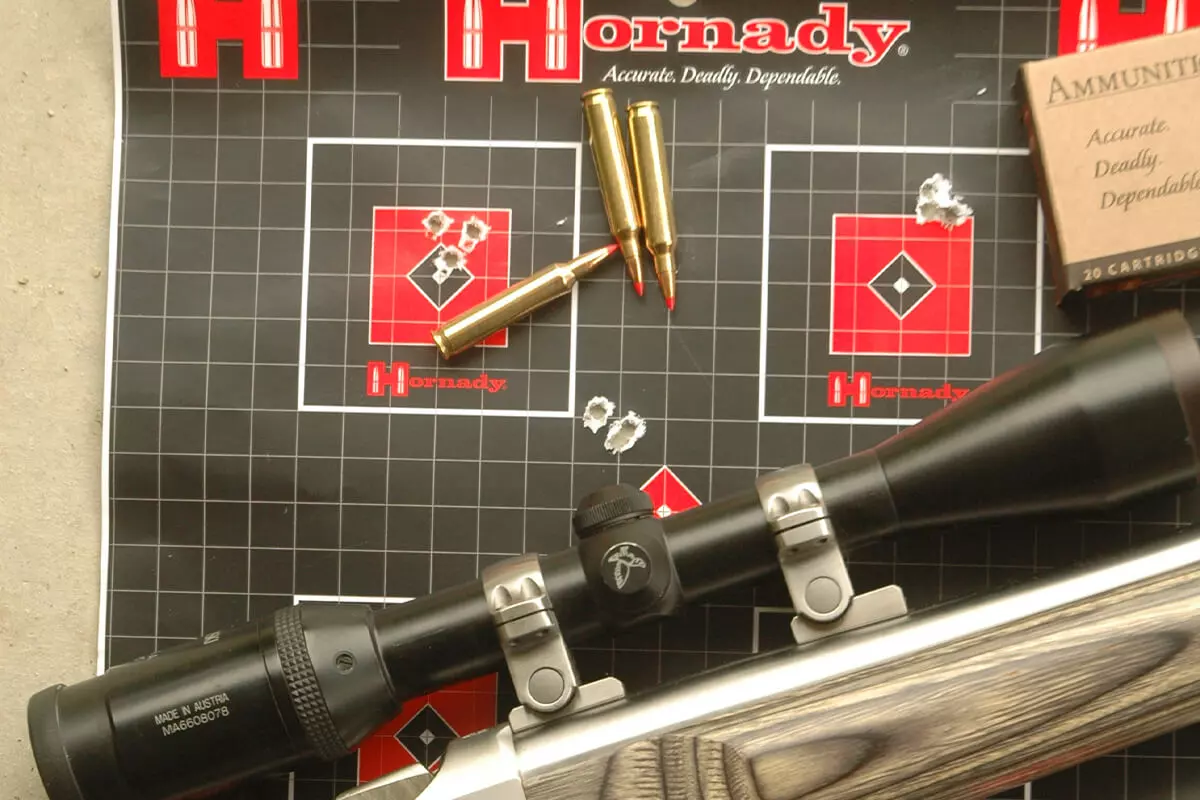
In developing our only .20-caliber cartridge, the Hornady/Ruger team took a step back and used the longer .222 Rem Mag case, wringing out a bit more velocity. In the early 2000s, I went on a prairie dog shoot with the Dakota Arms folks, shooting several of the wildcat .20s. I didn’t quite “get it.” They were accurate and effective but didn’t seem to do anything a fast .22 wouldn’t do.
I changed my tune when .204 Ruger came out in 2004. I lucked into one of the first Ruger No. 1s in .204, laminate and stainless…and a tack driver. Since then, it has been my go-to prairie dog rifle. Sometimes I shoot 32-grain bullets at 4225 fps. More often, I shoot 40-grain bullets at 3900; they resist wind better. Either way, I can call the impacts through the scope and correct them. (Pocketbook Savers: "The Best Budget Big Game Rifle Shootout.")
The amazing thing to me is I’ve had that rifle for 22 years, with many hundreds of rounds in prairie dog towns. The barrel should be ready to give it up…but not just yet. The .204 Ruger is a great varmint cartridge. However, unlike the .22s, bullet weights are inadequate for deer…and generally illegal.
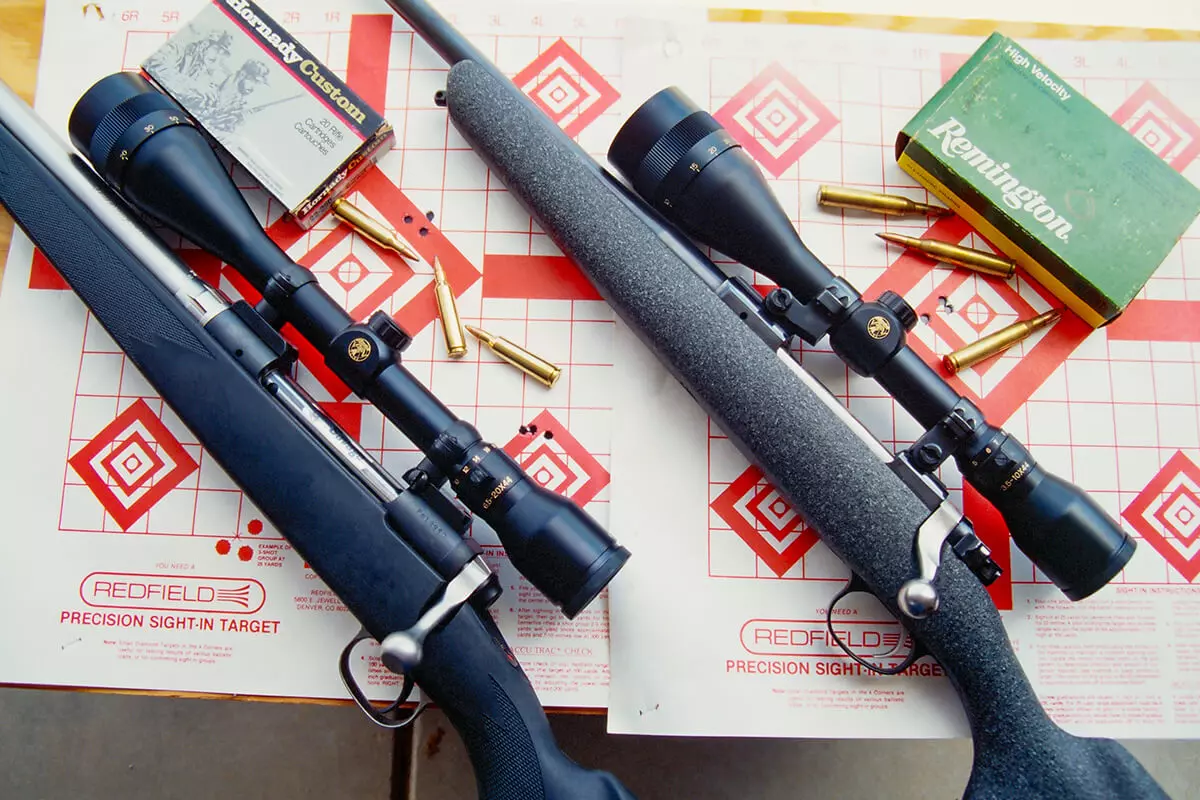
As a wildcat, the .22-250 was a legendary wildcat for 40 years. Since “legitimizing” as .22-250 Remington in 1965, the .22-250 has reigned supreme as the fastest and most effective varmint cartridge. With light bullets, it can break 4000; with 50-grain bullets and above, upper 3000s. At our annual prairie dog shoot in Wyoming, friend Gordon Marsh often starts with a Hornet or .204. When close targets grow scarce, he breaks out his “big gun.” A heavy-barreled .22-250. (Learn: "The Art of Effective Coyote Communication.")
In .22-250, most of us shoot 50 to 55-grain bullets in the high 3000s. Amazing accuracy and great downrange performance, as far as anyone needs to shoot. There are new popular .22 centerfires, like the .22 Creedmoor, that are specified for faster twists, stabilizing the heaviest bullets. As a varmint cartridge, the .22-50 still wins.
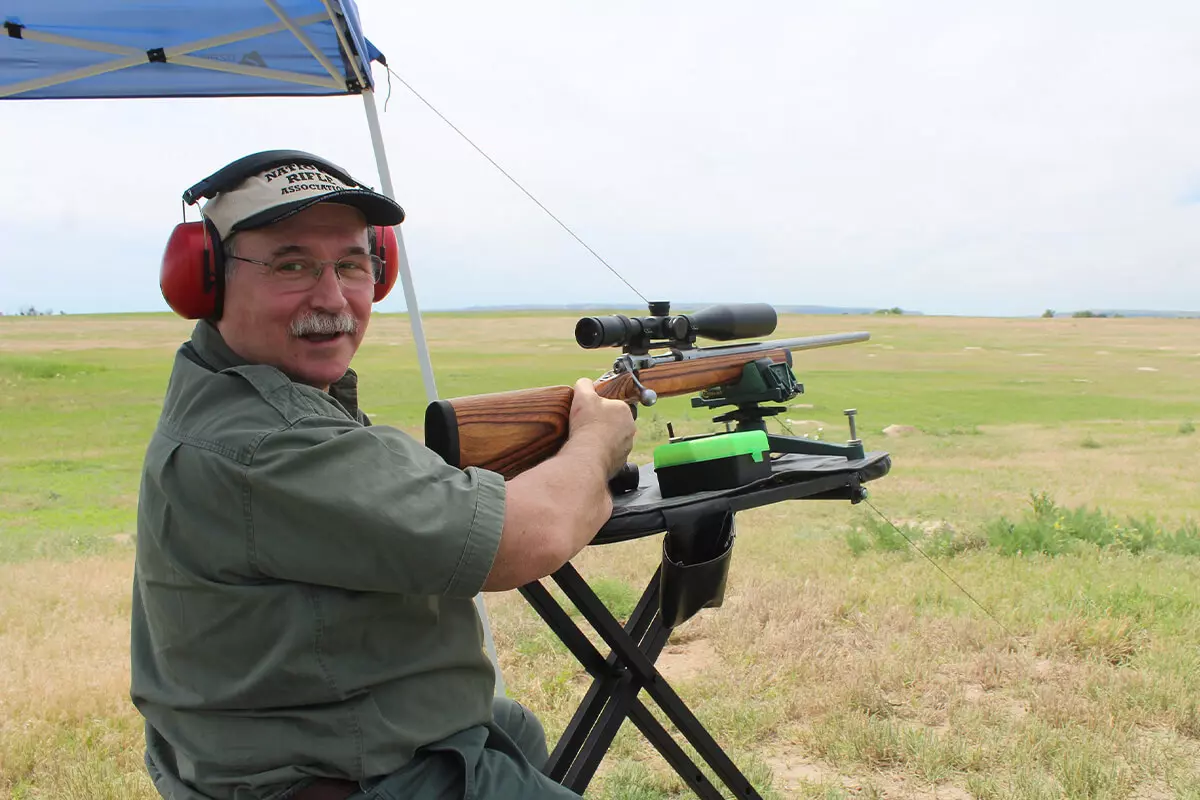
Gordon: Gordon Marsh in a prairie dog town in Wyoming, breaking out his “big gun.” In this context, the big gun is a .22-250, taken out when shots start to exceed sensible ranges for lesser cartridges.

Craig Boddington is one of today’s most respected outdoor journalists. He spent the past forty years exploring our natural world as a hunter and sharing his knowledge and experiences in dozens of books and through thousands of published articles and essays. He’s a decorated Marine, an award-winning author, and continues to be a leading voice for conservation and ethical hunting around the world.


