

September 07, 2026
By Craig Boddington
As seen on Petersen's Hunting
Northern Nevada is great country for big mule deer, but it was too early, too warm, the moon too bright and nothing was moving. Short on ideas and down to our final day of hunting, we saddled up and took a huge swing to the south.
We were riding back along rimrock above a dark canyon when we heard hooves in the rocks below us. I bailed off, snatched my rifle out of the scabbard, and flopped down on a flat rock. By this time several deer had reached the bottom, moving through brush. When they started up the far side they slowed to a walk and a big buck separated from his ladies, quartering away.
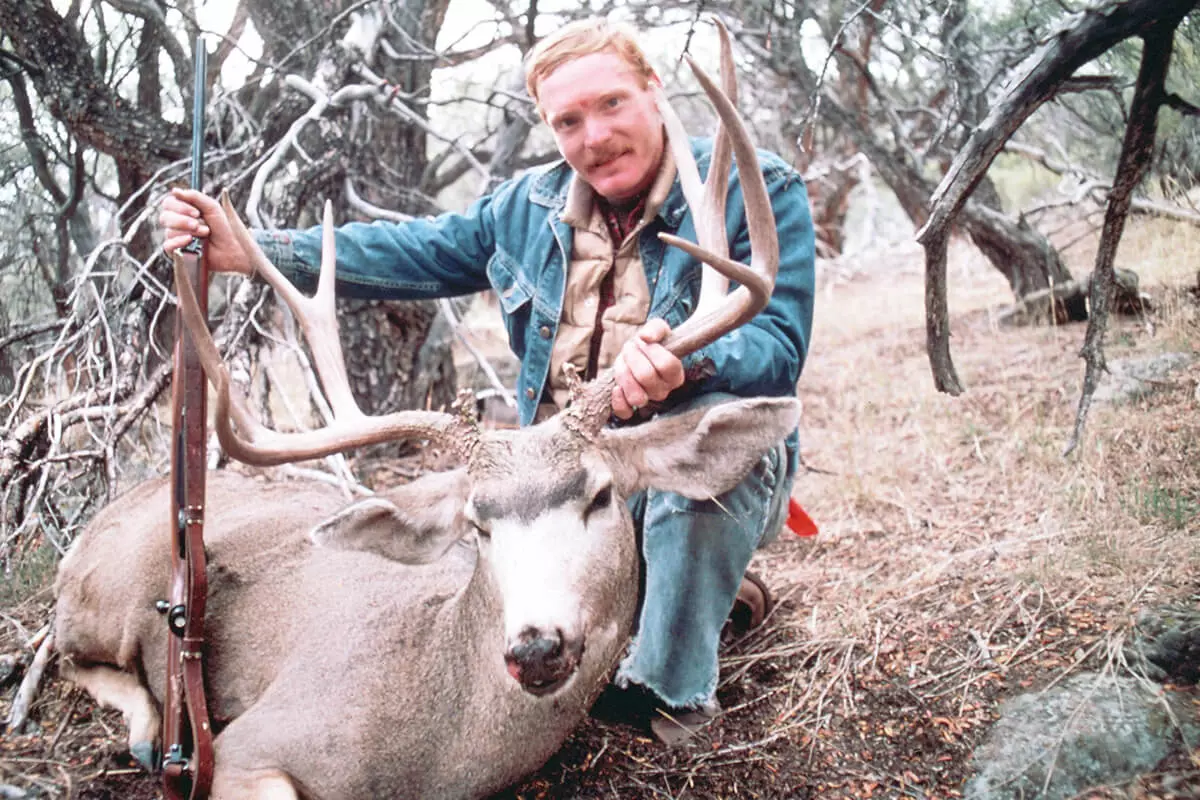
I held even with the top of the antlers and a bit ahead of the nose. There’s was no reaction to the shot, but the hold felt good. I stayed with it, got one more shot off, then he disappeared in the brush along the far rim. That’s where we found him, at that time my best mule deer. (Muley Mania: "Top 5 Rifle Cartridges For Hunting Mule Deer.")
That was 47 years ago, long before laser rangefinders or dial-up turrets. I was shooting a .30-06 with 180-grain spitzers, pushed fast at 2,800 fps. Distance was uncertain; I had guessed between 400 and 500 yards. If it was 450, I knew I had 30 inches of bullet drop. Must have been close on the distance because both shots hit, behind the shoulder and angling forward. It would have been nice to know the exact distance. However, I’m not sure there would have been a shot if I’d dithered with a rangefinder, then tried to dial the correction.
I can’t give you the boundaries between medium, long and extreme range. Every shot at game is situational, depending on wind, cover, animal movement and presentation. Plus, how steady you are, and how much time to set up. Any shot at game can be difficult, and long shots can be simpler than close. Paper and steel targets are forgiving, but there are no chip shots on live animals. Under ideal conditions, farther is ethically possible, especially with our near-perfect knowledge of range. But that’s not new. (Controversy Corner: "Is Long-Range Shooting at Animals Ethical Hunting?")
The first laser rangefinder I saw in the field was in 1994. Barnes Bullets’ Randy Brooks and I did a DIY elk hunt in western Colorado and he had one, a massive briefcase-sized device. Russian surplus, probably intended for artillery. We lugged it up to glassing points and ranged distant hills at 20,000 meters.
That technology evolved quickly. Bushnell introduced their Yardage Pro 400 in 1996, the first compact, affordable, laser rangefinder intended for hunters. Kevin Howard (a fantastic PR guy) had one on a deer hunt in eastern Colorado that fall. I was guiding him, and we spotted a weird buck, likely a mule deer/whitetail hybrid. Not so far, but in a tough system of breaks. I used the rangefinder effectively to keep track of our bearings while we crawled this way and that to get the shot. (Learn: "Understanding and Mastering Long-Range Hunting.")
The floodgates soon opened. Whether hand-held, tripod-mounted or combined with binoculars or scope, the laser rangefinder is now a standard accessory. It has virtually eliminated knowledge of range as a variable and seemingly enables field shooting at unlimited distances. This happened fast, leading new generations of hunters to believe they invented long-range shooting.
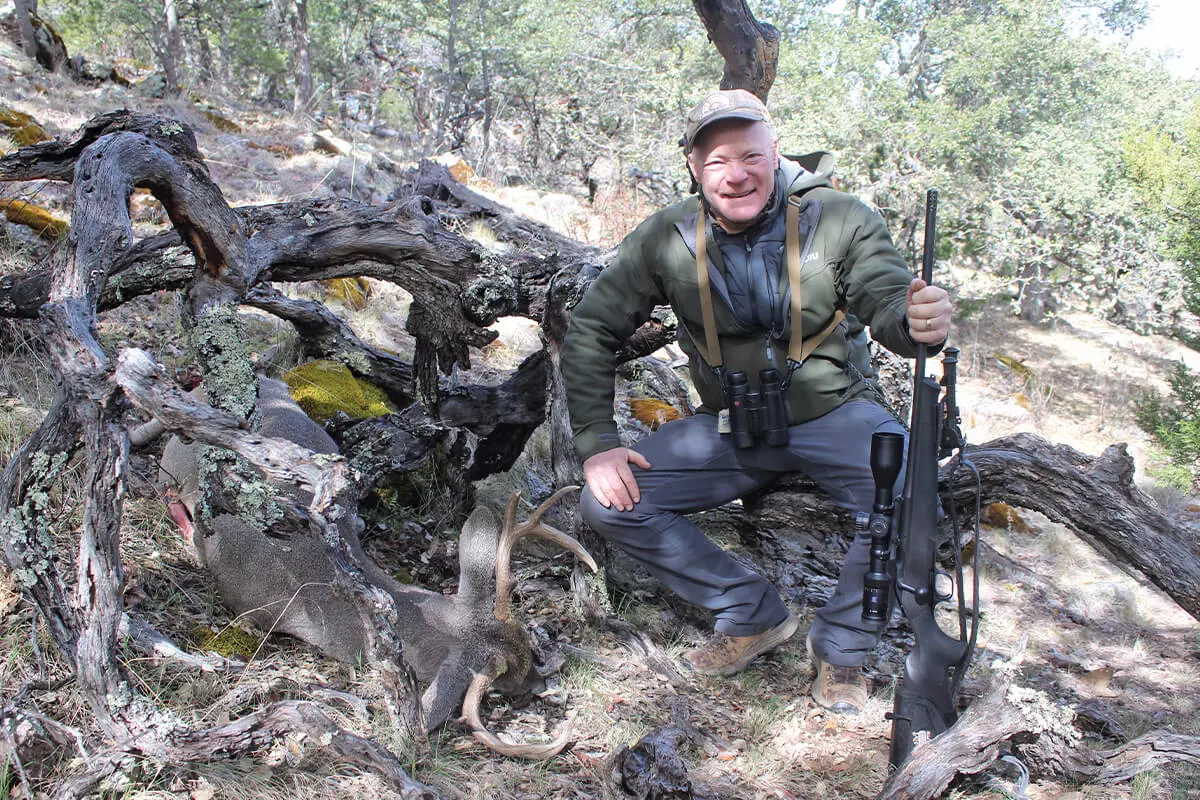
Most Americans are familiar with a football field, so in the 20th Century our common reference for estimating range was the “football field” method: How many football fields between you and an object? Pre-rangefinders, the only way to verify was to pace it out. The range-estimating game was played extensively when I was in Boy Scouts and then it was no longer a game in Marine Corps training.
American football only dates to the 1880s, so I don’t know what they did before that. Except they did. At Saratoga, October 7, 1777, Timothy Murphy of Morgan’s Riflemen climbed into a tree and mortally wounded British Major General Simon Fraser, turning the tide of that battle and probably the American Revolution. Murphy’s celebrated shot was 300 yards. With open sights and a patched round ball from a flintlock, it was a helluva shot. (Gear: "Long Range Hunting Must-Have Gear For Newbies.")
In the American Civil War, Confederate Jack Hinson was the best-known sniper. Using a .50-caliber Whitworth and a long rifle, he was believed to have 100 kills at ranges to half a mile. We don’t know his load, but at a half-mile his bullet drop might have been 100 feet.
The most famous shot fired in the American West was made by Billy Dixon on July 29, 1874, at Adobe Walls in the Texas panhandle. A group of 29 buffalo hunters (including Dixon and Bat Masterson) stood off 700 Comanches for three days. On the last day, using a .50-90 Sharps, Dixon took one last shot at hostiles on a distant bluff, knocking a warrior off his horse at 1,500 yards. To his credit, for the rest of his life, Dixon considered the shot a fluke, impossible to repeat. Dixon was entitled to humility. Later that year, as an Army scout, Dixon fought at the Battle of Buffalo Wallow and was one of eight civilians in history (along with William F. Cody) awarded the Medal of Honor.
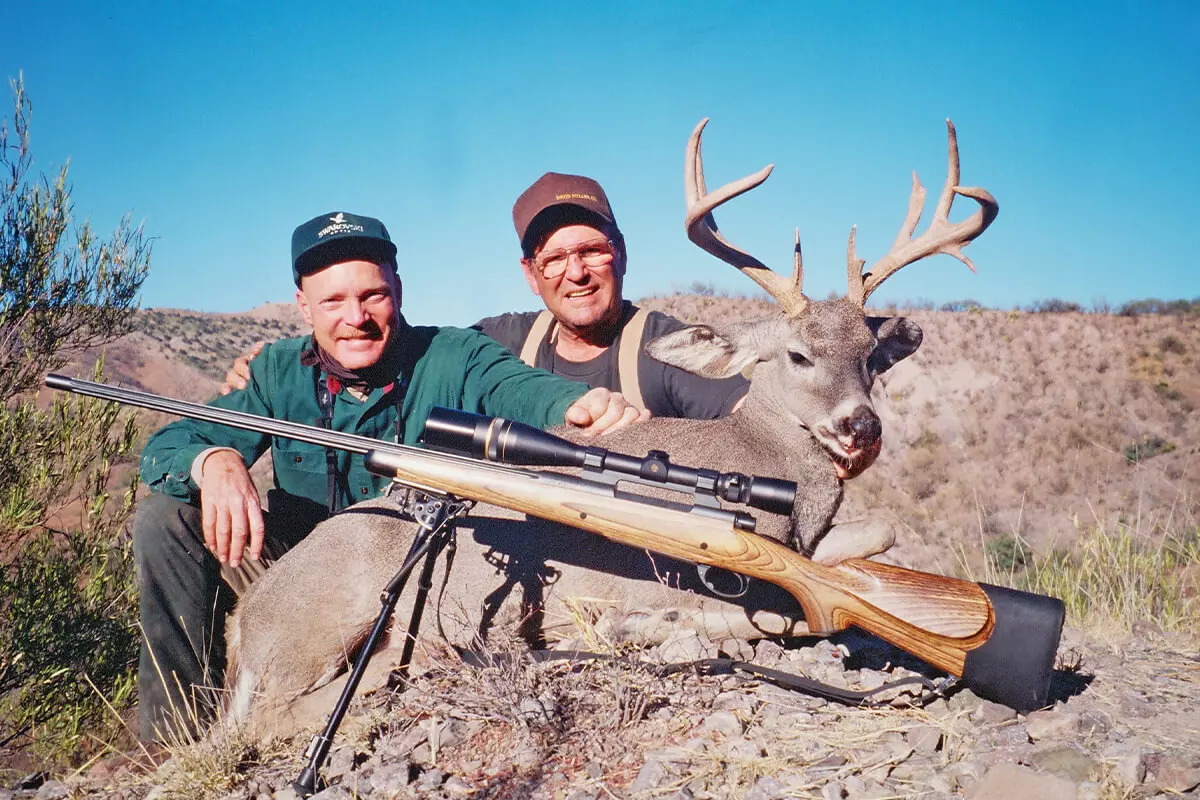


Craig Boddington is one of today’s most respected outdoor journalists. He spent the past forty years exploring our natural world as a hunter and sharing his knowledge and experiences in dozens of books and through thousands of published articles and essays. He’s a decorated Marine, an award-winning author, and continues to be a leading voice for conservation and ethical hunting around the world.


