.png)


.jpg)
.jpg)
.jpg)

By Gary Lacey
All my thoughts and ideas seem so simple in my mind. Like that small plumbing project,
after six times to the hardware store-reality tends to smack you in the face. That's where
the adventure begins. I hunted with Evan Couzens owner of Umziki Hunting Safaris
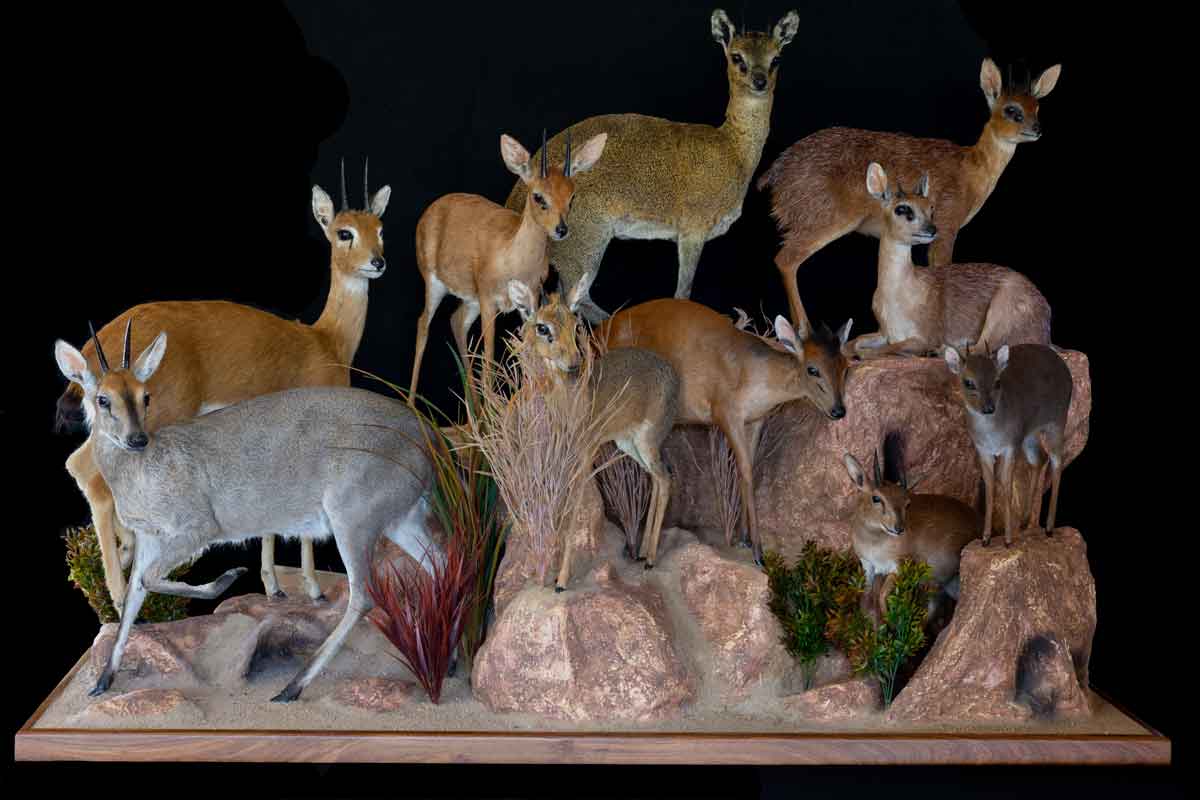
back in 2014. At that time I told him that I would enjoy hunting for the Tiny Ten. About
three years ago, Evan contacted me asking me if I would like to plan for that Safari.
Sounded easy enough, so a plan was set in motion. The hunt was to take place in May
2020 but as Covid hit it had to be rescheduled twice. Finally we settled on April 2021
and things came together.
Leaving home 62 hours later I found myself in Outjo, Namibia gateway to Etosha
National Park. In my mind I was expecting vast sand dunes -what I found was a
stunning landscape teaming with animals. I was on a short two day hunt with Lukas
Holtzausen owner of Arfika Jag Safaris. I was pleased to find out that the long drought
had not affected the Dik Dik population as much as the rest of the animals. After looking
over dozens, we found a good Ram and number one was in the salt. Lucas spent the
rest of the time with me showing me the spectacular countryside, and treating me like
one of his family including a dinner with his entire extended family.
Seems like a blink and I was off to South Africa. Werner Mulder who was to be my PH
for the rest of the trip, picked me up in Port Elizabeth. We drove for about two hours to
our first hunting camp for Cape Grysbok and Blue Duiker. A blind had been set up
before we arrived for the Blue Duiker. Trail cameras showed that there were a couple of
good Rams coming in every day. A cold front had moved in bringing with it heavy rains
and high winds. It was decided that we would rest and wait for the weather to break.
Skipping the blind that afternoon and to head out at night for the Cape Grysbok. The
time schedule that Evan set up gave us three days for this portion of the Safari. The first
two nights we had little success in finding a respectable Grysbok. We weren’t having
much luck in the blind for Duiker either. It was speculated that it was either the weather
or a Caracal had moved into the area changing their behavior. The decision was made
to move to a new area that Evan had as a backup plan for the Blue Duiker in the
morning. Evan always has a plan B and even C for all of his hunts. This would be the
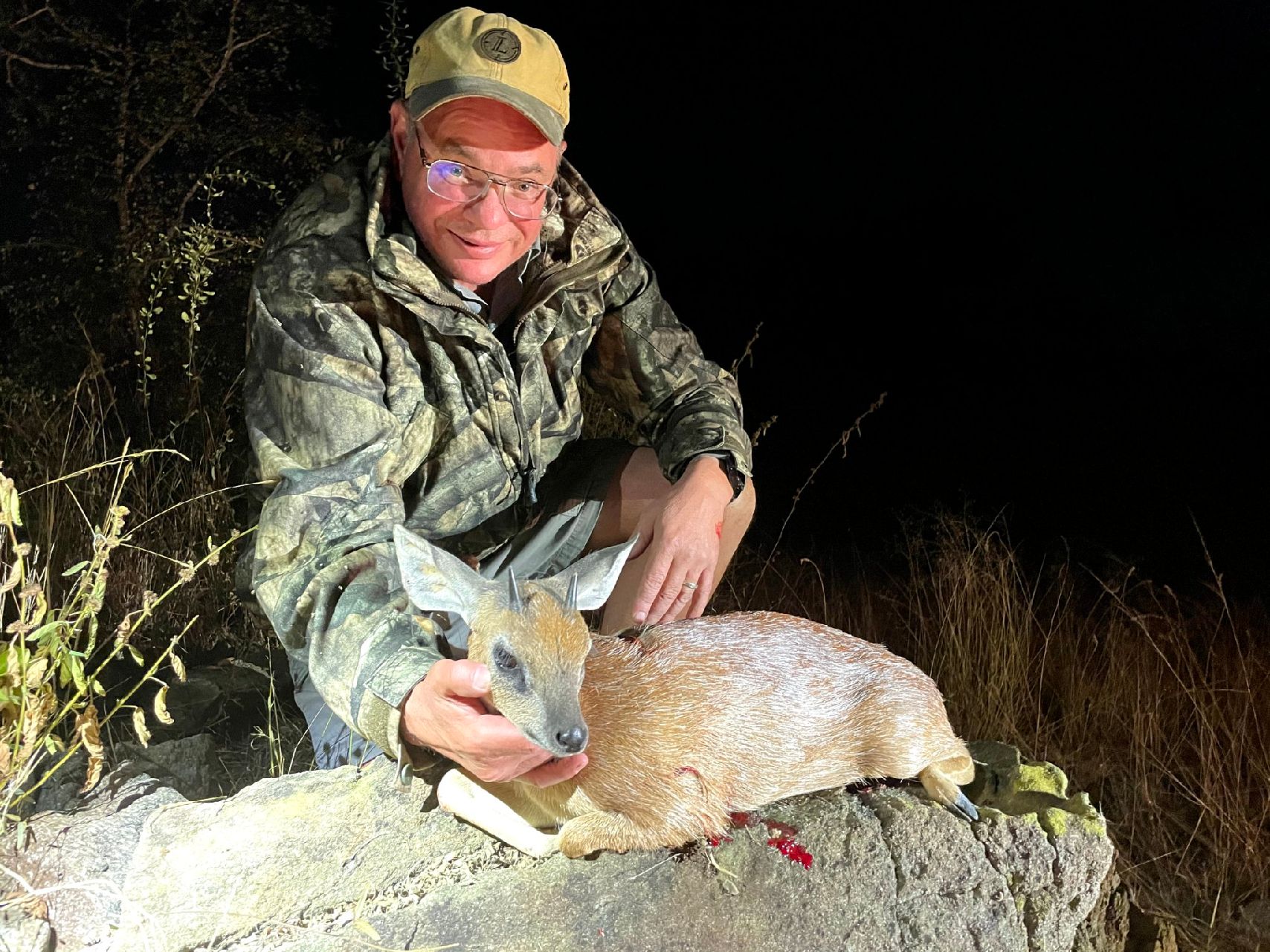
last night to hunt for the Grysbok, so we would give it our all. About 1:30 am, we
stopped for a coffee break, as everybody was getting very tired. We decided to try one
more area before calling it a night. At 2:30 am we came across a respectable Ram and
number two was in the salt.
The new camp for the Blue Duiker was about three hours away, trail cameras showed
the duiker’s coming in the early afternoon. So after pictures and getting to bed around
4am, we needed to depart by 7:30am to reach the next blind by noon. After seeing
nothing for the first two days, it was exciting to finally see some action. Sitting in a blind
is not my favorite thing to do, in fact it was excruciating for me. After a couple of hours,
we had a small male come into the water hole. Werner said better ones will come in.
After several warthogs entertained us, a female came in with a broken horn- again we
held off. As the light started to fade and this was our last day for the Blue Duiker, I was
becoming anxious! With about 10 minutes of daylight left a tremendous male came in
and number three was the salt.
After a good night sleep, we headed north for 7 hours to the Free State in search of
Oribi. I had also expressed an interest in taking a Roan that was available in this area.
We spotted the Roan first. As we were stocking him, he spotted us! He ran for about
two kilometers down into the valley and disappearing behind a hill. Once he was out of
sight, we walked down to the spot where we last saw him. Looking over the hill he was
staring at us 60 yards away- Roan down 8 am. After pictures and a trip to the skinning
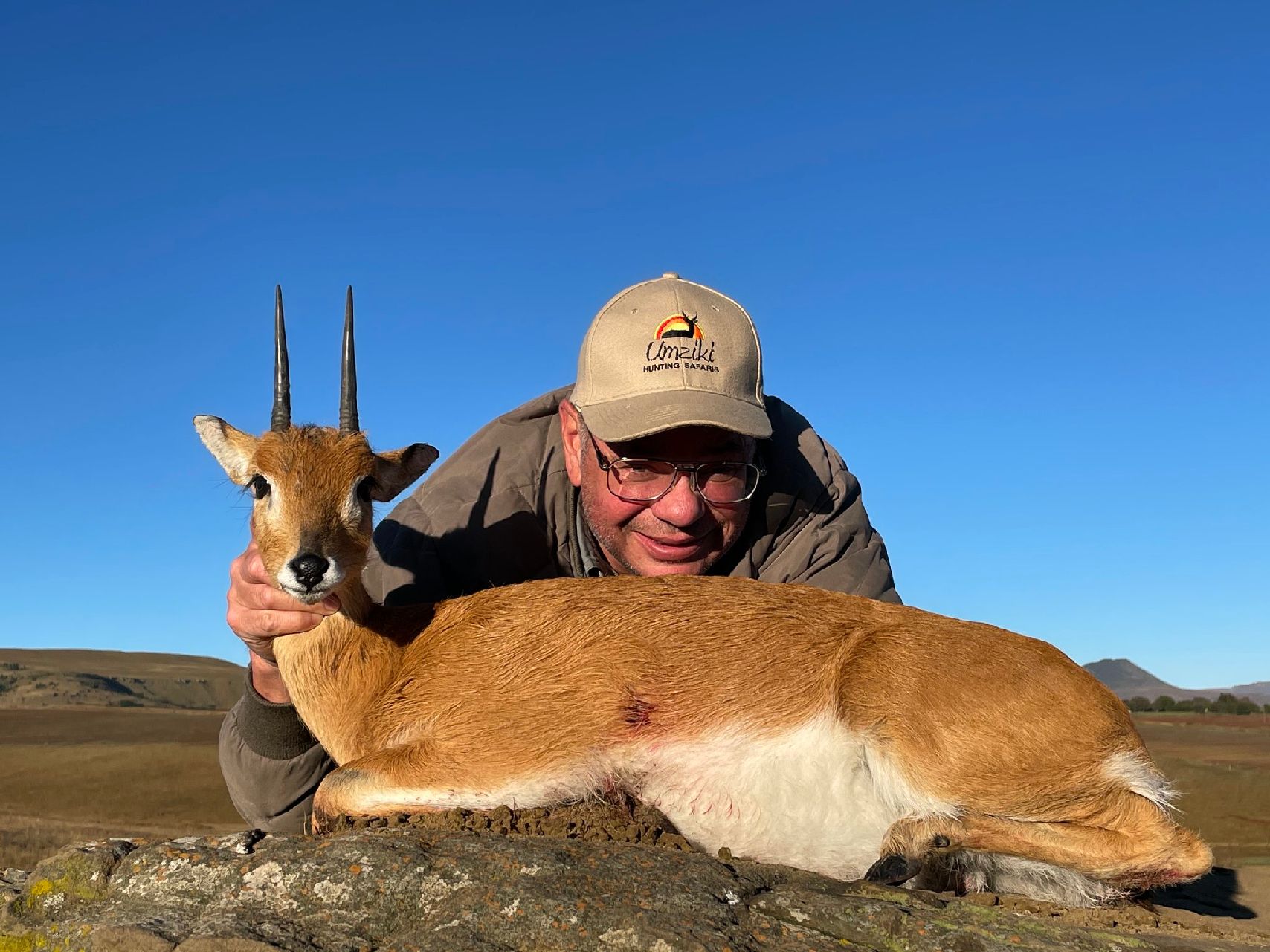
shed, we were off to find an Oribi. After looking for several hours we spotted a nice
Ram. Things were starting to look up- a Cape Grysbok, Blue Duiker, Roan and Oribi in
two days.
We had encountered some local protest in the area blocking roads and burning trucks
so you wanted to leave early hopefully avoiding the situation. Leaving at 4 am we drove
for another eight hours north to the Limpopo for Sharps Grysbok. After arriving at camp
we quickly unloaded and was joined by PH Ian Brown. As luck would have it we spotted
a Sharps Grysbok by the road as it jumped up and ran off. Driving past it 100 yards or
so we walked back and made a stock. I was amazed by watching Ian- an absolute brute
of a man walk so slowly and quietly through the brush. I think I managed to step on
every stick and dry leaf on the ground, after 30 minutes or so we caught up and it turned
out to be a female. Later that day we spotted another female and I was feeling good
about this area. Setting out at sunrise and packing a lunch we are prepared to make a
day of it. Out all day until dark without seeing any Grysbok, we decided to try our luck at
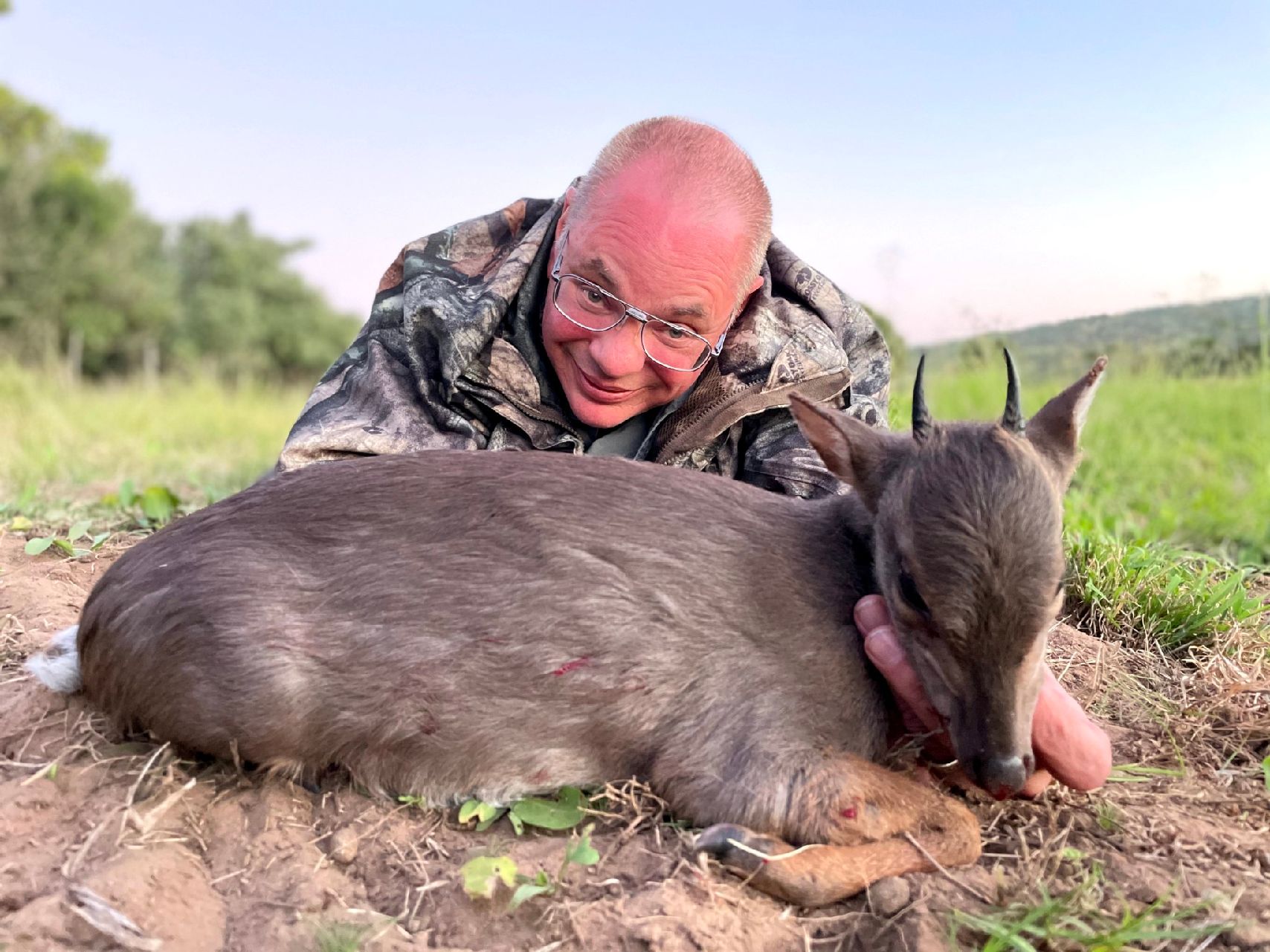
night. We spotted an old male around midnight and number four was in the salt.
Klipspringer was up next. Ian knew of a place about 1 ½ hours away that he has always
seen Klipspringers. I was quite amused when we got out of the truck and start walking.
Ian said we were just going to go around this little hill and take a look. After 3 ½ hours
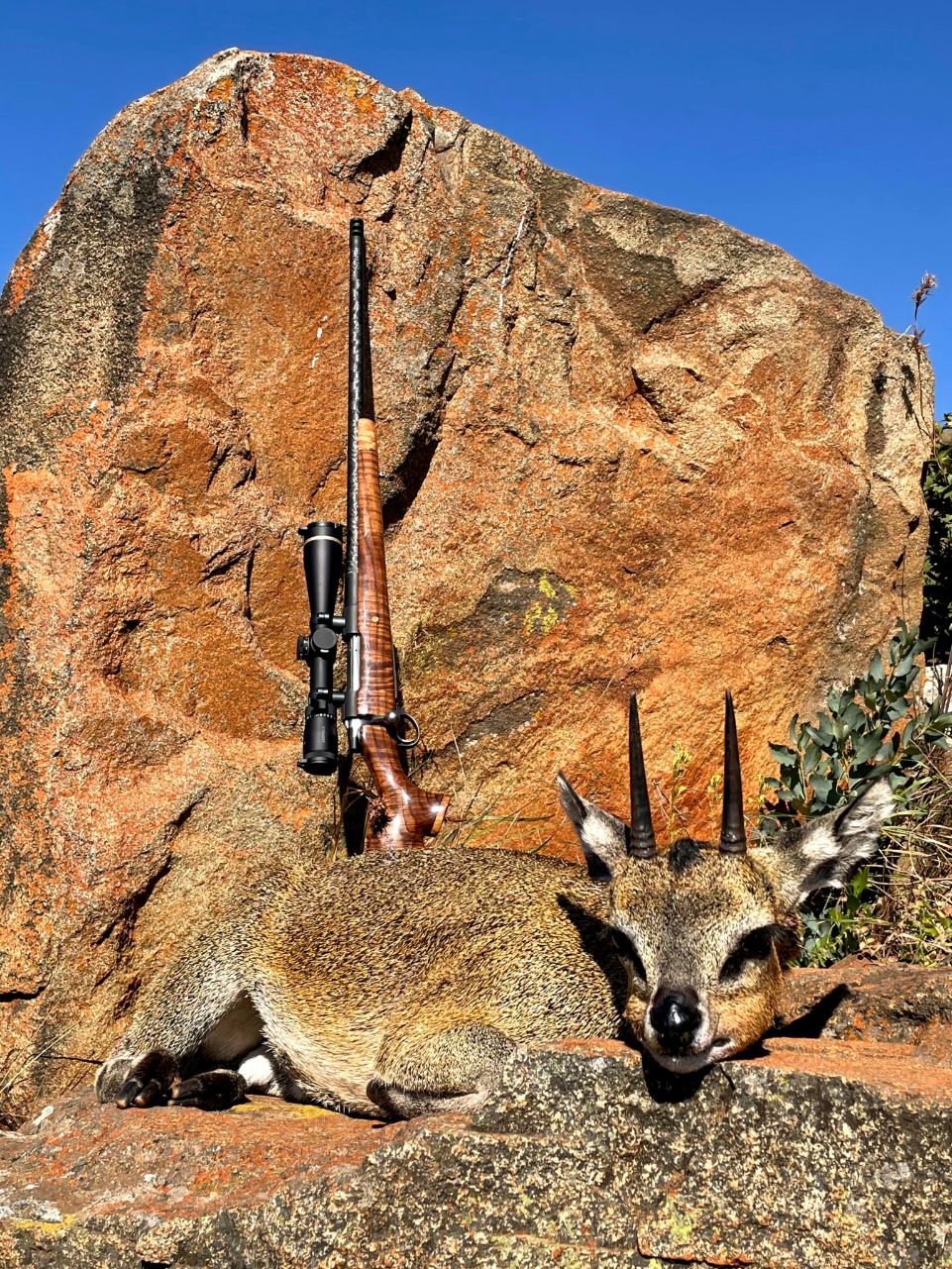
and several hills later we reach the top of the mountain. Glassing from the top Werner
spotted a pair about 300 yards down the hill in a boulder field. The male looked good
but I was a little uncomfortable shooting that far as the wind was howling. We managed
to close the gap to about 180 yards shooting down off a cliff. Klipspringer in the salt.
After enjoying a fabulous dinner we were off to our next camp in the Mpumalanga
Province a short five-hour drive a way. It was in this area that was to be the last place to
look for a Steenbok, unable to connect with one earlier. I had also expressed interest in
a Buffalo and of course Evan said- I have a place. After reaching camp unpacking we
went out looking for Steenbok and Duiker later that afternoon we found a magnificent
Grey Duiker. Warner was able to get the sticks up, squeezing the trigger but my safety
was on - in an instant he was gone. Rookie mistake, not my first or my last. Next
morning Buffalo hunt was on. We arrived at the hunting area at daybreak setting out
looking for tracks. In about a half an hour Werner spotted an old dugga boy in the brush.
Driving past him a couple hundred yards we got out, check the wind and set out.
Werner’s only advice was to make the first shot count – no pressure there. 20 minutes
later the Buffalo spotted us and was staring us down. I kneeled down against a tree and
shot him just below the chin at 35 yard. It was raining hard and Werner was worried
about losing a blood track in the heavy rain, so instead of waiting we set off right after
him. It was thankfully a good hit in the lungs and the blood loss was massive. We
caught up to him in about 300 yards. A follow-up insurance shot and it was over- only 8
am. After a quick lunch we made a plan for a Steenbok, not having any luck that night,
tomorrow would be the last chance! Fortunately Evan, once again found another
property where we were able to hunt. Thabane our tracker spotted one bedded down,
we quickly put up the sticks and waited. After about 15 minutes he stood up and number
seven was in the salt.
Werner and I were to be joined by Evan for the last portion of the hunt. We traveled to
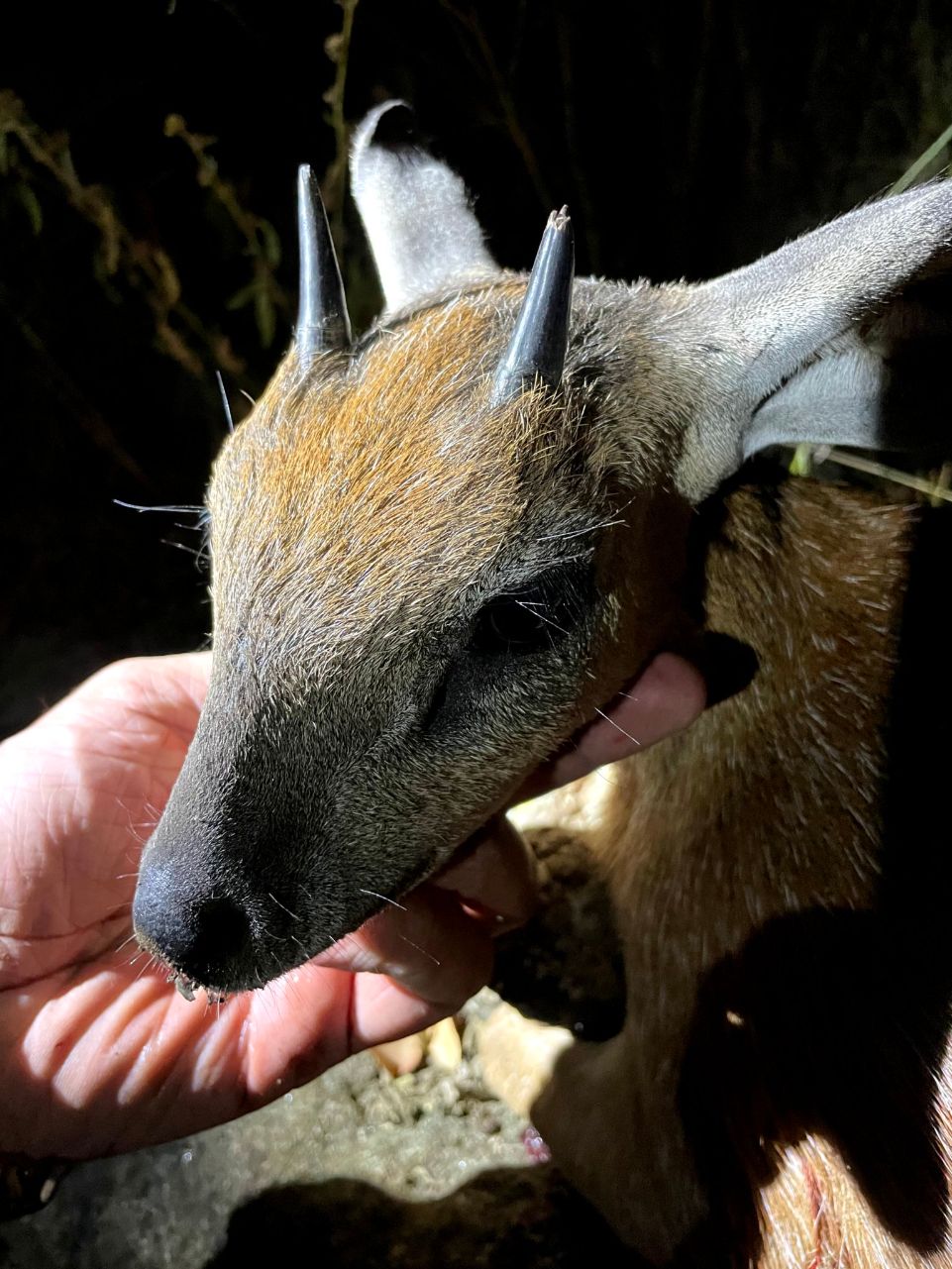
the Midlands to meet Evan where he had several areas we could hunt for Grey Duiker.
After a five-hour drive arriving late in the afternoon, we had a quick dinner and headed
out. After looking over several Duikers we spotted a good male- number eight was in
the salt.
Three days left we headed up north to the sand forest of Zululand. South Africa was
blessed with an abundance of rain this year and most of the grass was still chest high. I
was worried because I figured that the Red Duiker and Suni would be the most difficult
to get. After arriving at camp, we had a couple of hours of daylight left. We went out to
access the area and the plan was to drive covering as much area as possible. The
problem was most everything we saw ran as soon as they spotted the truck. Not seeing
anything that evening- doubts began to creep into my mind. The plan was to pack lunch
and spend every available hour looking. The first day there was a lot of activity seeing
lots of Red Duiker. However after the first couple of hours, everything went quiet staying
that way until midafternoon. We drove past a good Red Duiker, quietly stocking and
finally had my chance on the sticks. The shot was a bit far back. After about an hour or
so looking, my heart began to sink. Warner circled back one more time and spotted
blood in the road. Thabane was able to spot him bedded down. Now number nine was
in the salt with one day left.
The plan was the same for the Suni. We started up at daylight and hunted all day. Evan
did spot a pair of Suni at 4pm but before we could react, they were gone in an instant.
As the last couple of hours of daylight began to fade, I was thinking it had been a trip of
a lifetime and maybe this wasn’t meant to be! My thoughts turned to my long trip home
and I wasn’t focused on the task at hand. At last light, Evan spotted a Suni Ram.
Quickly getting on the sticks, there was a small opening between the trees. Werner told
me to shoot if I could see him. I shot knocking him down only to see him get up and run
off. With little blood and darkness closing in, we were unable to find him in the thick
brush. Unfortunately, I had to leave for the airport. I learned when I got home that Evan
was able to recover the Suni- my emotions were almost overwhelming.
It had been an epic Safari- two countries eight different camps and over 2000 miles
driving. It was all made possible by Evan Couzens owner of Umziki Hunting Safaris
along with my PH for the trip Warner Mulder. Evan has the connections along with his
tireless scouting, for all the best areas for each of the Tiny Ten
I cannot thank Evan and Werner enough for their expertise, patience and kindness. A
big thanks to all the land and concession owners that made this possible.
It has been the most challenging, exciting and exhausting hunt of my life I could have
not asked for a better adventure- loved every minute of it.
Gary Lacey is a retired UPS driver from Oregon USA.
This is Gary’s fourth trip to Africa having also hunted several Western states and Alaska
in the US. Gary used a custom stocked SAKO L61R in a 7mm Rem Mag using 140 gr. Solids for
the tiny ten. He also brought along a 12 Ga. Shot gun he used for the Blue Duiker.

