
.png)


.jpg)
.jpg)
.jpg)

California offers some of the most varied deer hunting in the West, with five distinct mule deer subspecies spread across dramatically different regions and seasons. Despite political misconceptions, harsh climates, and predator pressure, the state supports a large, passionate hunting community and resilient deer populations that locals know and value well.
October 22, 2025
By Craig Boddington
I get tired of hearing it. “Left coast, land of fruits and nuts.” California is a huge state, politically controlled by the big cities. Sadly, not unusual in today’s West, folks in the hinterlands have little vote in state politics. And California has lots of hinterlands.
The Central Coast, where I hang my hat (at least some of the year), is still pickup truck and gun rack West, like most of California actually. The Golden State has a large hunting public and great deer hunting. Easily the most varied in the West. In fact, one of the toughest things about California deer hunting is figuring out which deer to pursue.
Choices
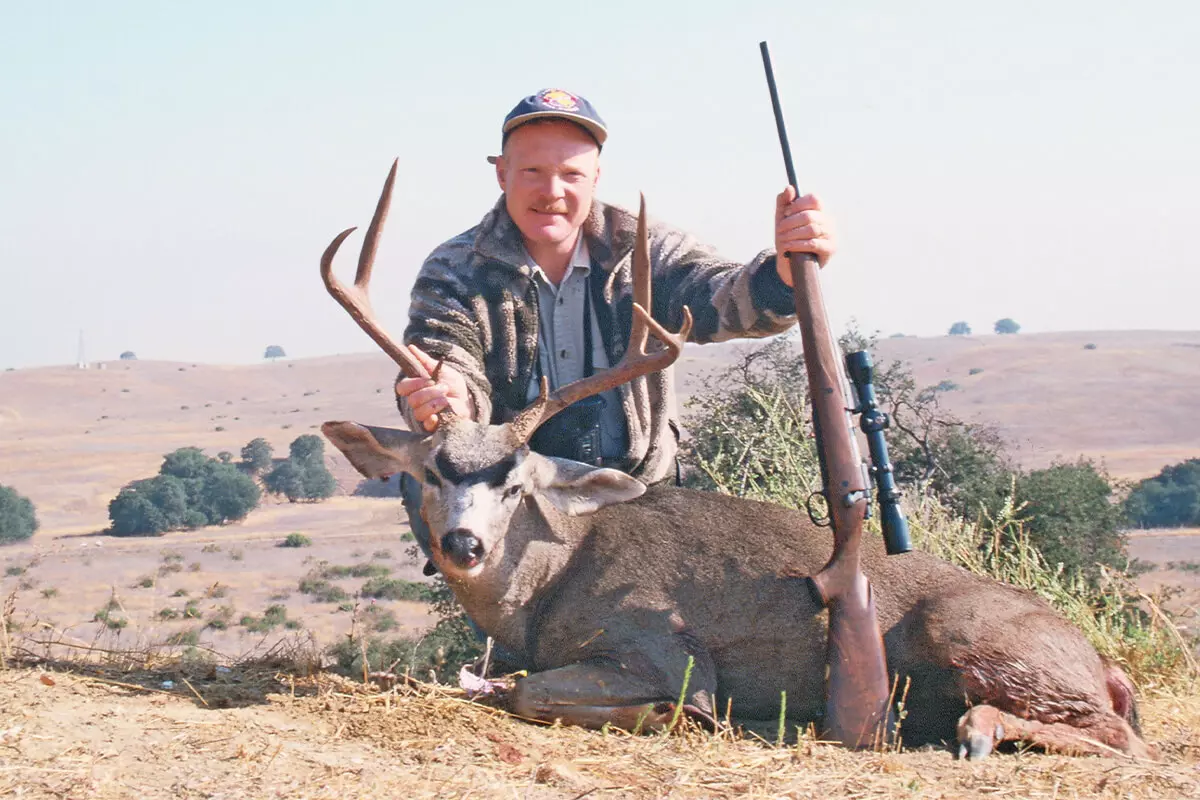
A three-by-two with some mass, this is a very good coast-zone buck, not quite a pure blacktail but close. (Photo courtesy of Craig Boddington)
California admits to no whitetails, although “leakers” are not impossible. All Golden State deer are varieties of mule deer. But which one? California is the only state or province that hosts more than three subspecies of mule deer, and in fact holds five.
Most widespread is the California mule deer, Odocoileus hemionus californicus. A bit smaller and paler than the Rocky Mountain muley, from the L.A. Basin north to above Santa Barbara, east into the desert, and north through the big valleys to the Sierra. These are the deer I hunted most frequently during the 15 years I worked in the Petersen Publishing headquarters in the heart of L.A.
Although getting out of the city was always a mission, in that period I took nice bucks an hour north, south, and east of the office.
Technically, an hour west, too, because in those days there was wonderful deer hunting on Santa Rosa Island. There still is on Catalina Island. No record-keepers separate California from Rocky Mountain mule deer. Probably just as well, because it’s difficult to be certain where they start and other races take over.
Columbian blacktails (O. h. columbianus) occupy a wide range in northwest California, west of Interstate 5, and from the Central Coast north to Oregon. Exactly where California mule deer leave off and true blacktails start is open to debate, with a broad hybrid zone.
For sure there is blacktail influence in my San Luis Obispo County, with some deer showing the pure blacktail’s tail stripe, others with tails more like mule deer. Ears also vary, some exaggerated like muleys, while other individuals have the smaller ears of blacktails.
Genetic Variation and Boundaries
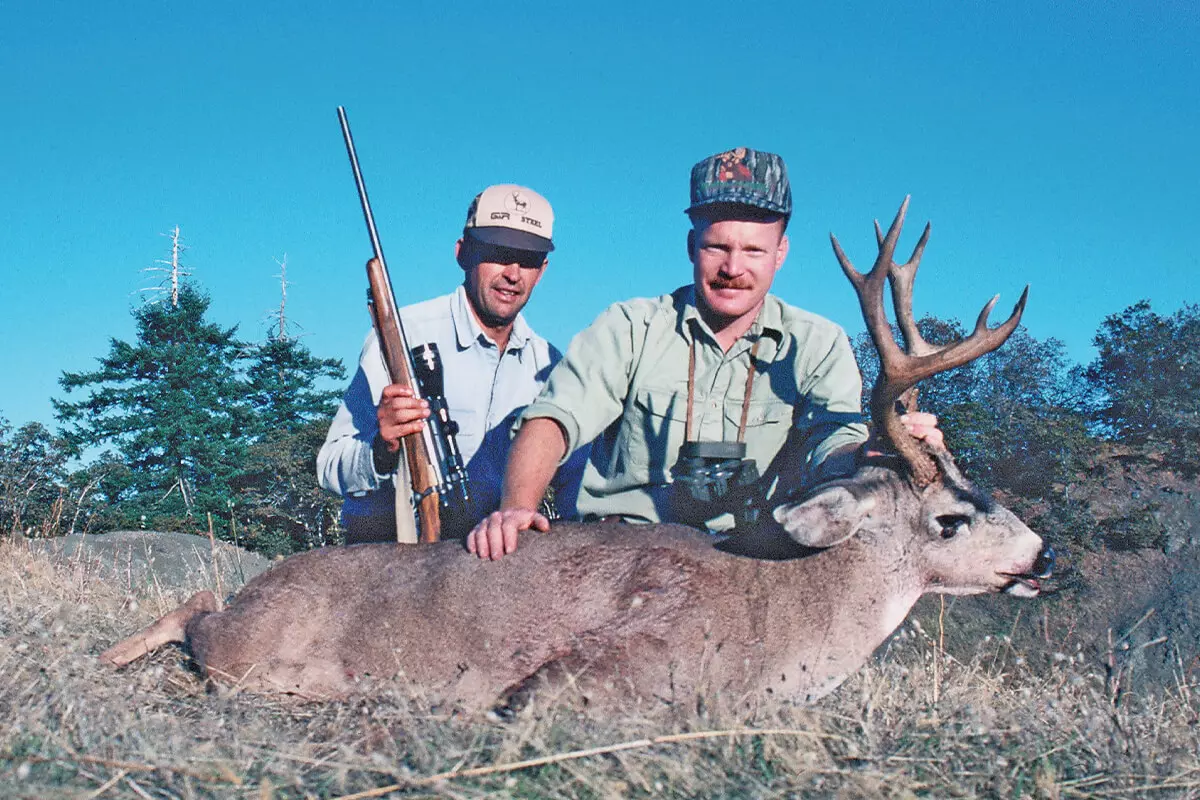
Outfitter Jim Schaafsma and Boddington with an excellent Columbian blacktail from northern California. This was a “known” buck called Rattler, heavy, old, and on his way downhill. (Photo courtesy of Craig Boddington)
To some extent, it’s a moot point. With hot, dry summers and periodic drought, our Central Coast deer are small-bodied and rarely grow large antlers. At full maturity, big fork-horns are common, clean four-by-fours exceptionally rare.
In my area these are our local deer and we love them, sort of deer friends with two benefits. First, the huge “coast zone” is one of few areas remaining with unlimited permits requiring no drawing. Second, the coast zone offers one of the West’s earliest seasons. Archery opens in late July; rifle season begins the second Saturday in August.
It sounds crazy, daytime temps over 100 degrees means a footrace to the cooler when you get a buck. That early season is long traditional, and there’s method in the madness. These deer have perhaps North America’s earliest rut, usually chasing hard before the season ends (third week of September). They need to rut early so fawns are dropped in the soft spring months, in order to be strong enough to make it through the summer stress.
California Deer Hunting is its Best Kept Secret
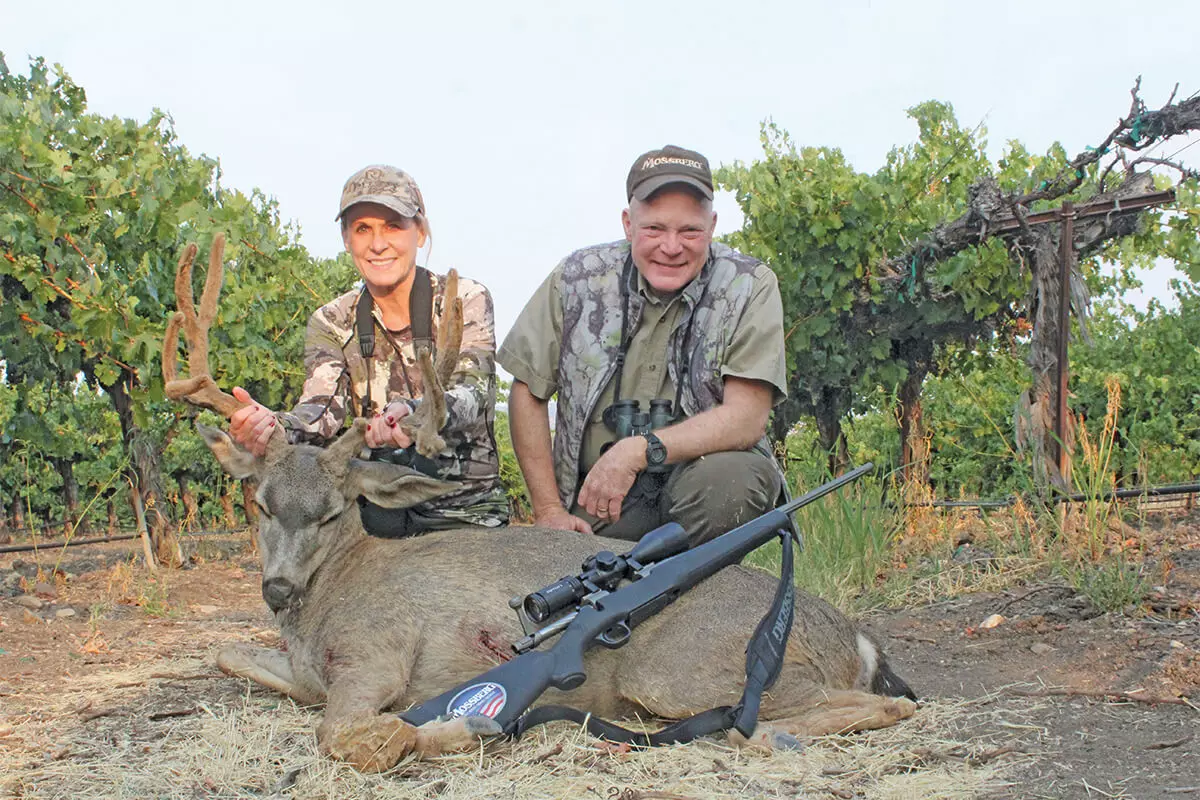
hunter with mule deer buck
Although afternoons are brutally hot, there is little deer movement until sunset, offering another advantage to that weird August season. California’s Central Coast has the largest daytime/nighttime temperature swings in the Continental U.S., 50 to 60 degrees is common.
You’ll still be sweating when the light fades past 9 p.m., but you’ll need a heavy jacket at dawn. With morning temps much lower, it takes a while for the day to heat up, so the morning hunt is long. There’s also a fair amount of midday movement, especially to and from water. Find a spot in the shade overlooking a waterhole; it’s a good place to catch bucks in the heat of the day.
True blacktails pick up farther north. SCI’s blacktail boundary starts in Monterey County, while B&C’s is a bit farther north yet, the bottom of the Monterey Peninsula. What we call Northern California, above the Bay Area, is huge, lots of public land, to my thinking the very best of all hunting for blacktail deer.
Although I’ve hunted blacktails in Oregon several times, my best bucks have come from northern California.
Highway Separation
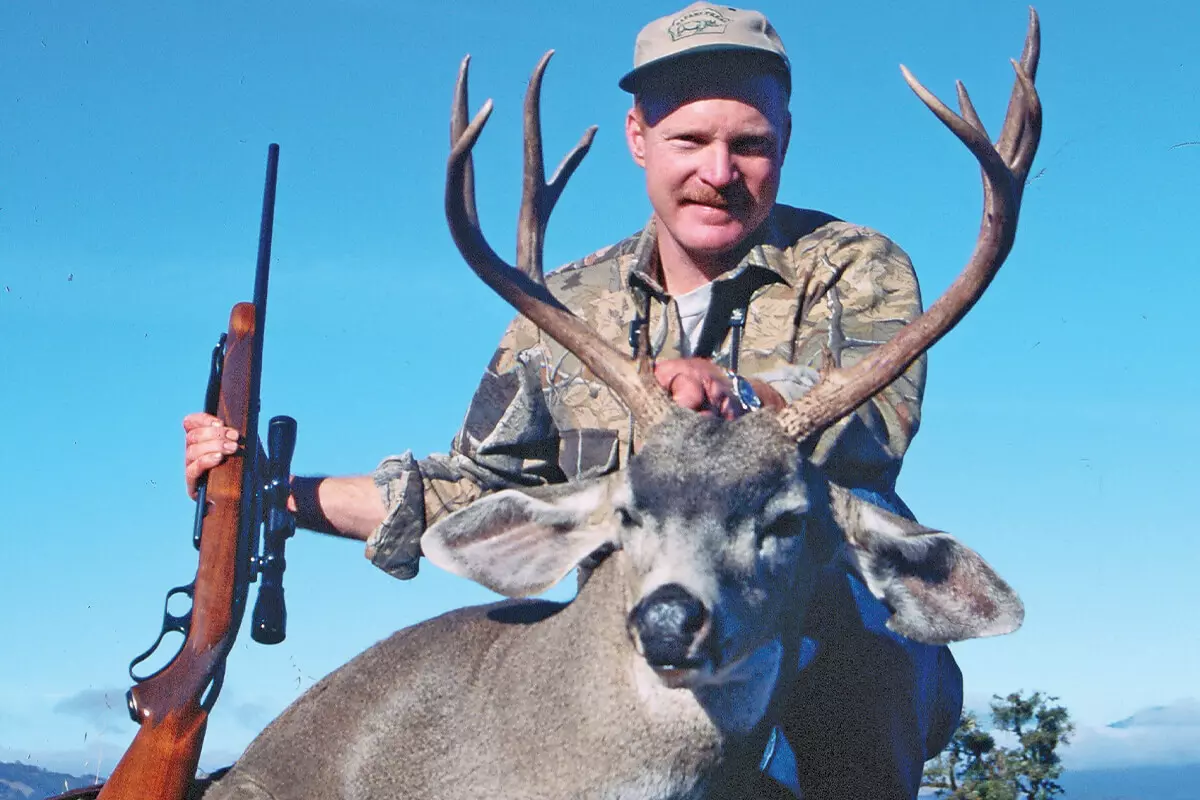
Although not quite B&C-quality, this is an exceptional Columbian blacktail from northern California, clean four-by-four with eyeguards, good mass. (Photo courtesy of Craig Boddington)
In the northeast, from I-5 eastward to Nevada, deer have traditionally been considered Rocky Mountain mule deer (O. h. hemionus). Some authorities long called them Inyo mule deer (after Inyo County, O. h. inyoensis). Although not universally accepted, this seems a growing trend among scientists.
Whatever you call them, the high country of the northern Sierra produces California’s largest deer in both body and antler, and California’s only mule deer that can properly compete against Rocky Mountain deer from elsewhere in the West. The population fluctuates with severe winters and the best areas are carefully managed, tags difficult to draw.
I’ll be honest: Combine tough drawing with great distance, and I know little about California’s big-buck country. I have friends who play the odds and scout religiously; they’ve been rewarded with awesome bucks.
California is a huge state; few hunters have in-depth knowledge of all our mule deer. I make no such claim, and I know even less about the big deserts to the southeast, along the Colorado River. The country is harsh, but there are some deer, and occasional large bucks, with even more disagreement about just what they are.
Across the river, in Arizona, they are desert mule deer, considered O. h. crooki. Likely also on the California side. However, some Mexican authorities consider the deer of the Sonoran desert to be different, the long-argued burro deer, O. h. eremicus. Take your pick, but the few deer of California’s southeastern deserts are almost certainly desert mule deer.
Oh, I promised five California mule deer races, didn’t I? Yes, there is a fifth. Below Los Angeles, from Orange County southward along the coast to Mexico, then on south about halfway down the Baja Peninsula, the mule deer are absolutely a distinct subspecies, accepted by science as the southern mule deer, O. h. fuliginatus.
Not to leave anyone hanging, Baja Sur (southern Baja) has its own unique subspecies, the Peninsula mule deer (O, h. peninsulae), not found elsewhere.
In The South
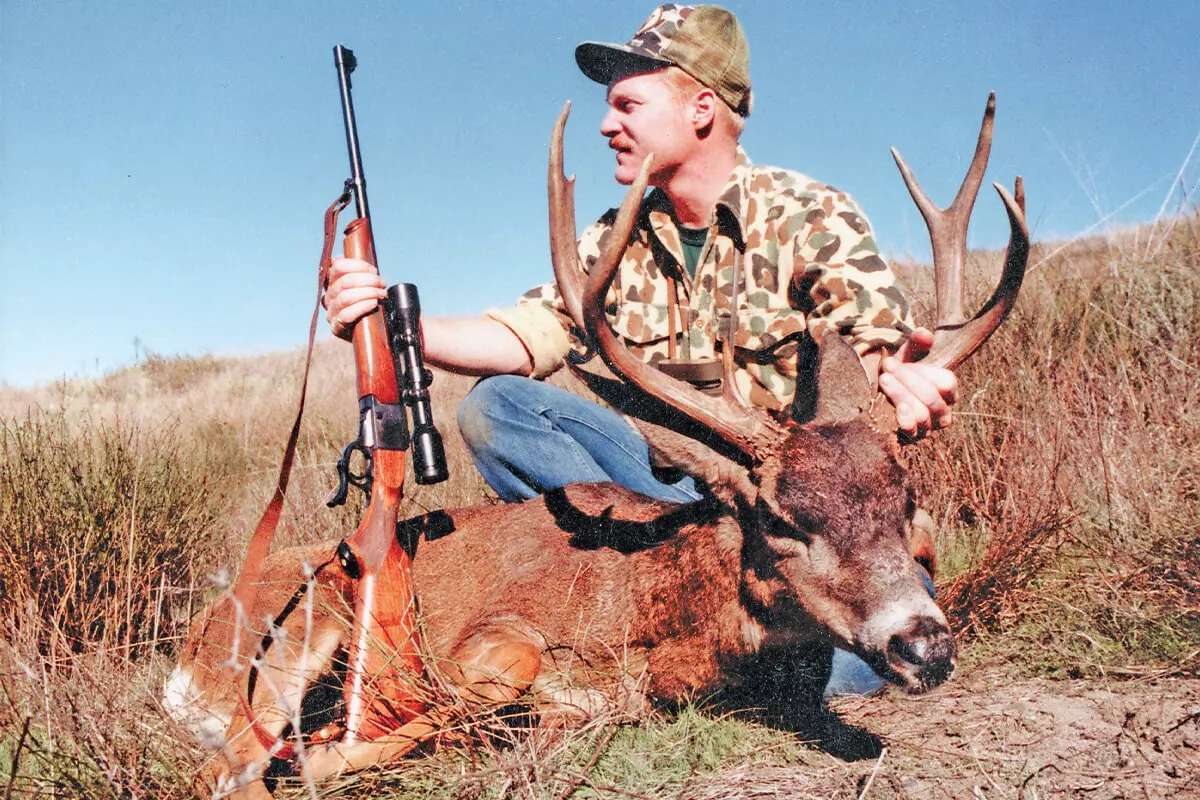
This is Boddington’s best southern mule deer, taken in Orange County. Today it’s popular to call this subspecies the “Baja blacktail.” (Photo courtesy of Craig Boddington)
Southern muleys are the deer we saw regularly on Camp Pendleton during the 30 years I was in and out of there, so they are familiar. In appearance, they are darker than California mule deer, tend to have blockier bodies with shorter legs and, at their best, sort of square racks. As with all smaller mule deer races, “clean” four-by-fours at maturity are uncommon.
South of the border, in northern Baja, these are the deer we are now calling Baja blacktails. I’m okay with that name; they actually look more like blacktails than most muleys. However, by any name they don’t stop at the border.
Because of coastal development, opportunities to hunt them on the California side have diminished, but there is hunting on both public land and private, and they are distinctly different.
California’s deer herd is estimated at 500,000. That’s a big number, but it’s a big state, so densities are rarely high. That current number is low after 2022–2023 record snows in the Sierra, which followed a historic drought.
The Golden State also has a predator problem, with the West’s largest cougar population, long protected by a ballot referendum that decreed them a non-game species, precluding management. Amazingly, the deer persevere, up in good years, down in bad. Tens of thousands of hunters pursue them annually.
Their exact pedigree doesn’t matter; California hunters love their backyard deer, just like all deer hunters across the nation.
October 22, 2025
By Craig Boddington
I get tired of hearing it. “Left coast, land of fruits and nuts.” California is a huge state, politically controlled by the big cities. Sadly, not unusual in today’s West, folks in the hinterlands have little vote in state politics. And California has lots of hinterlands.
The Central Coast, where I hang my hat (at least some of the year), is still pickup truck and gun rack West, like most of California actually. The Golden State has a large hunting public and great deer hunting. Easily the most varied in the West. In fact, one of the toughest things about California deer hunting is figuring out which deer to pursue.
Choices
A three-by-two with some mass, this is a very good coast-zone buck, not quite a pure blacktail but close. (Photo courtesy of Craig Boddington)
California admits to no whitetails, although “leakers” are not impossible. All Golden State deer are varieties of mule deer. But which one? California is the only state or province that hosts more than three subspecies of mule deer, and in fact holds five.
Most widespread is the California mule deer, Odocoileus hemionus californicus. A bit smaller and paler than the Rocky Mountain muley, from the L.A. Basin north to above Santa Barbara, east into the desert, and north through the big valleys to the Sierra. These are the deer I hunted most frequently during the 15 years I worked in the Petersen Publishing headquarters in the heart of L.A.
Although getting out of the city was always a mission, in that period I took nice bucks an hour north, south, and east of the office.
Technically, an hour west, too, because in those days there was wonderful deer hunting on Santa Rosa Island. There still is on Catalina Island. No record-keepers separate California from Rocky Mountain mule deer. Probably just as well, because it’s difficult to be certain where they start and other races take over.
Columbian blacktails (O. h. columbianus) occupy a wide range in northwest California, west of Interstate 5, and from the Central Coast north to Oregon. Exactly where California mule deer leave off and true blacktails start is open to debate, with a broad hybrid zone.
For sure there is blacktail influence in my San Luis Obispo County, with some deer showing the pure blacktail’s tail stripe, others with tails more like mule deer. Ears also vary, some exaggerated like muleys, while other individuals have the smaller ears of blacktails.
Genetic Variation and Boundaries
Outfitter Jim Schaafsma and Boddington with an excellent Columbian blacktail from northern California. This was a “known” buck called Rattler, heavy, old, and on his way downhill. (Photo courtesy of Craig Boddington)
To some extent, it’s a moot point. With hot, dry summers and periodic drought, our Central Coast deer are small-bodied and rarely grow large antlers. At full maturity, big fork-horns are common, clean four-by-fours exceptionally rare.
In my area these are our local deer and we love them, sort of deer friends with two benefits. First, the huge “coast zone” is one of few areas remaining with unlimited permits requiring no drawing. Second, the coast zone offers one of the West’s earliest seasons. Archery opens in late July; rifle season begins the second Saturday in August.
It sounds crazy, daytime temps over 100 degrees means a footrace to the cooler when you get a buck. That early season is long traditional, and there’s method in the madness. These deer have perhaps North America’s earliest rut, usually chasing hard before the season ends (third week of September). They need to rut early so fawns are dropped in the soft spring months, in order to be strong enough to make it through the summer stress.
California Deer Hunting is its Best Kept Secret
hunter with mule deer buck
Although afternoons are brutally hot, there is little deer movement until sunset, offering another advantage to that weird August season. California’s Central Coast has the largest daytime/nighttime temperature swings in the Continental U.S., 50 to 60 degrees is common.
You’ll still be sweating when the light fades past 9 p.m., but you’ll need a heavy jacket at dawn. With morning temps much lower, it takes a while for the day to heat up, so the morning hunt is long. There’s also a fair amount of midday movement, especially to and from water. Find a spot in the shade overlooking a waterhole; it’s a good place to catch bucks in the heat of the day.
True blacktails pick up farther north. SCI’s blacktail boundary starts in Monterey County, while B&C’s is a bit farther north yet, the bottom of the Monterey Peninsula. What we call Northern California, above the Bay Area, is huge, lots of public land, to my thinking the very best of all hunting for blacktail deer.
Although I’ve hunted blacktails in Oregon several times, my best bucks have come from northern California.
Highway Separation
Although not quite B&C-quality, this is an exceptional Columbian blacktail from northern California, clean four-by-four with eyeguards, good mass. (Photo courtesy of Craig Boddington)
In the northeast, from I-5 eastward to Nevada, deer have traditionally been considered Rocky Mountain mule deer (O. h. hemionus). Some authorities long called them Inyo mule deer (after Inyo County, O. h. inyoensis). Although not universally accepted, this seems a growing trend among scientists.
Whatever you call them, the high country of the northern Sierra produces California’s largest deer in both body and antler, and California’s only mule deer that can properly compete against Rocky Mountain deer from elsewhere in the West. The population fluctuates with severe winters and the best areas are carefully managed, tags difficult to draw.
I’ll be honest: Combine tough drawing with great distance, and I know little about California’s big-buck country. I have friends who play the odds and scout religiously; they’ve been rewarded with awesome bucks.
California is a huge state; few hunters have in-depth knowledge of all our mule deer. I make no such claim, and I know even less about the big deserts to the southeast, along the Colorado River. The country is harsh, but there are some deer, and occasional large bucks, with even more disagreement about just what they are.
Across the river, in Arizona, they are desert mule deer, considered O. h. crooki. Likely also on the California side. However, some Mexican authorities consider the deer of the Sonoran desert to be different, the long-argued burro deer, O. h. eremicus. Take your pick, but the few deer of California’s southeastern deserts are almost certainly desert mule deer.
Oh, I promised five California mule deer races, didn’t I? Yes, there is a fifth. Below Los Angeles, from Orange County southward along the coast to Mexico, then on south about halfway down the Baja Peninsula, the mule deer are absolutely a distinct subspecies, accepted by science as the southern mule deer, O. h. fuliginatus.
Not to leave anyone hanging, Baja Sur (southern Baja) has its own unique subspecies, the Peninsula mule deer (O, h. peninsulae), not found elsewhere.
In The South
This is Boddington’s best southern mule deer, taken in Orange County. Today it’s popular to call this subspecies the “Baja blacktail.” (Photo courtesy of Craig Boddington)
Southern muleys are the deer we saw regularly on Camp Pendleton during the 30 years I was in and out of there, so they are familiar. In appearance, they are darker than California mule deer, tend to have blockier bodies with shorter legs and, at their best, sort of square racks. As with all smaller mule deer races, “clean” four-by-fours at maturity are uncommon.
South of the border, in northern Baja, these are the deer we are now calling Baja blacktails. I’m okay with that name; they actually look more like blacktails than most muleys. However, by any name they don’t stop at the border.
Because of coastal development, opportunities to hunt them on the California side have diminished, but there is hunting on both public land and private, and they are distinctly different.
California’s deer herd is estimated at 500,000. That’s a big number, but it’s a big state, so densities are rarely high. That current number is low after 2022–2023 record snows in the Sierra, which followed a historic drought.
The Golden State also has a predator problem, with the West’s largest cougar population, long protected by a ballot referendum that decreed them a non-game species, precluding management. Amazingly, the deer persevere, up in good years, down in bad. Tens of thousands of hunters pursue them annually.
Their exact pedigree doesn’t matter; California hunters love their backyard deer, just like all deer hunters across the nation.
Over the past 40 years, Craig Boddington traveled to 56 countries to hunt about 300 species with several hundred outfitters - over 110 hunts in Africa alone. From Kyrgyzstan to Kansas, Mozambique to Montana, no other hunter is more qualified to identify a good outfitter.
FIND YOUR OUTFITTER


Let Us Know What You Think!
Comments